

Travelers,
Last week proved that there can never be a quiet week in the travel industry. Not only did the FAA issue a ground stop and Outlook went down for a day, but I also received several requests for Christmas and New Year’s week travel, or “Festive” as we call it in the travel advisory industry. People, this is too close in. These locations booked up months ago at five star hotels. I noted that booking windows have become compressed in the face of what travelers view as global instability after a year rocked by the cartel incident in Mexico, hurricanes in Hawaii, protests in Europe, and the Iran war. Travelers are waiting until the last minute to book their travel, hoping to see flight prices drop or make sure the weather and political environment will cooperate for their vacation.
Seeking a sense of calm, I’ve been binge watching The Gilded Age’s previous seasons and devouring this year’s new episodes.
There’s nothing like watching the machinations of fictional high society members in gorgeous dresses and fancy hats to remind me that most of the issues I deal with are champagne problems.
This week’s Master Key and Upgrade both focus on the resurgence of interest in the Gilded Age. I attended a Gilded Age mansion tour from Get My Guide last week in New York as background research for these two pieces. Namely, I wanted to look into how the trend is appearing both in the surge of historic home rentals in Europe and the shift in decor I’m seeing appear across the luxury hotel landscape.
Substack serves as a place for all of my hospitality industry obsessions to play out. With subscriber numbers for the Upgrade around 1400, I’ve been thrilled that other people enjoy the intersection of business, finance, economics, and travel essays that I write. Thanks for being here.
Safe Travels,
Anne Marie
🗝️ Pre-Departure — Hospitality Hot Takes
Are American Tourists the New Dollar Princesses? Old-World Estates in Europe are Opening Their Doors, and Americans are Flocking To Stay
From Consuelo Vanderbilt’s dowry to a £3,100 weekend at Frampton Court, how family-owned houses in Britain and Ireland cover their repair bills
I love old things, which is difficult when you live in the US. Our country is young, and we have a habit of tearing down buildings in the name of progress. I grew up with a mother who lived for antiques and period dramas, and those tastes now define my own. My happy place is the British countryside. I thrive in an old estate and a tweed suit. Give me a cup of tea, a classic book, and a long walk down a wooded lane or a cobblestone street. I was born in the wrong era, but I’m too much of a feminist to envision happiness in a previous timeline.
If you love the Gilded Age, Downton Abbey, and Jane Austen as much as I do, you may have gone to Europe in search of a taste of that romance.
European estate owners welcome you with open arms.
In the US, luxury runs on wealth. If you can pay enough, you can walk in the door. Tech billionaires and sports stars skip the waiting lists at private schools and country clubs. European luxury, meanwhile, was historically gated by bloodlines and status. Today, those worlds are colliding. The Millennials, Gen Xers, and Boomers of the European aristocracy have inherited homes whose taxes and maintenance can no longer be covered by the farming and investment portfolios that sustained earlier generations. So, what is the landed gentry to do? Create a hotel.
Many of these families are opening their doors for tours, buyouts, and overnight stays for tourists to get a taste of the world they’ve been part of for generations. After all, re-roofing a castle does not come cheap.
After the third castle brochure landed in my inbox this fall, each with a note along the lines of “this family is looking for American clients to rent their estate for the Christmas holidays, do you know anyone?”, I started wondering whether wealthy American tourists are the new Dollar Princesses.
Americans have a reputation for being loud and tipping generously. “Not all Americans but always an American” is delivered in snarky commentary on Instagram posts. In luxury home rental circles, Americans are seen as easy guests: friendly, low-demand, big budgets, and usually a multigenerational group, which means less risk of parties or damage.
This week’s Upgrade looks at several great estate houses that sell stays to fund their upkeep (Mapperton and Frampton Court in England, Inveraray Castle in Scotland, and Temple House in Ireland), plus a few more, and compares their move into tourism with the dowry system that kept their ancestors afloat.
The first bailout was a marriage
A Dollar Princess was a wealthy American heiress of the Gilded Age who married into the European aristocracy, trading her father’s fortune for a title and an old family name. The trend ran from roughly the 1870s until the First World War.
In the popular tv series, Downton Abbey, a titled family with a big house and a leaky roof marries into American money through Cora Crawley. The tale is fiction, but real marriages looked just like this.
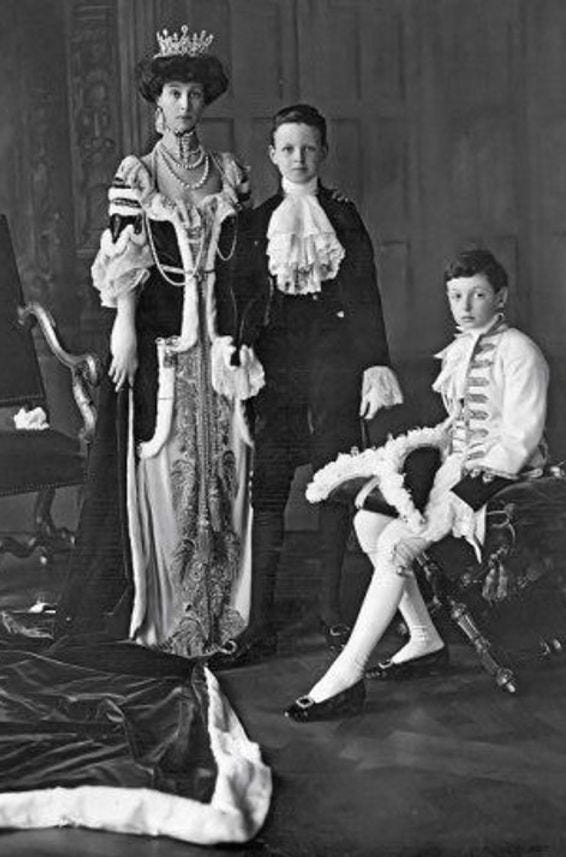
The most famous deal was Consuelo Vanderbilt’s marriage to the ninth Duke of Marlborough on November 6, 1895. Her father’s settlement, $2.5 million in railroad stock, went to restoring Blenheim Palace and replenishing its furnishings and library, much of which had been sold off in the 19th century. The duke reportedly told Consuelo on their honeymoon that he had married her only because he felt obliged to save Blenheim.¹ Her $2.5 million would be about $100 million today, and in 1895 it bought far more than that sum does now. Fun fact - Anderson Cooper is a Vanderbilt.
Julian Fellowes tells a version of this story in The Gilded Age. Bertha Russell, married to an industry titan, arranges for her daughter Gladys to marry the Duke of Buckingham against Gladys’ wishes. The duke wants the Russell fortune to revive his family’s finances.²
Dowries like these covered repairs for generations. Today, American money arrives to shore up these estates in smaller pieces, from tickets, weddings, film crews, holiday cottages, and buy outs.
What an estate costs
Historic Houses, the trade body for privately owned historic houses, reports an average upkeep bill of £160,000 a year per house. Bigger houses cost far more. Hatfield House spends a “seven-figure sum each year,” according to Nick Moorhouse, and Lady Ashcombe put Sudeley Castle’s upkeep at around £500,000. Both figures come from a 2013 article, so I expect they have only climbed since publication.
Historic Houses also reports about £2 billion in repairs waiting across its members, double the bill in 2020. Construction costs, taxes, and labor have only increased in the past six years. Over 47% of members delayed or canceled urgent work between 2020 and 2022. A slew of new inheritance tax laws have simultaneously hurt the income passed to the next generation to pay for these repairs. In a December 2024 survey, 87% of members said changes to inheritance tax relief would hurt them.
The UK once had more than 5,000 stately homes.
About 1,650 remain, and roughly 660 of those rely on public visits for at least part of their upkeep, up from 550 in 2009, according to a 2020 study by law firm Boodle Hatfield.³
Families usually add visitors in stages, because opening the door brings extra insurance, theft worries, security costs, and a loss of privacy.
Day visits with set tour times are typically a family’s first foray into hosting. Overnight stays are the newer step: buyouts, organized group stays on set dates, and bed and breakfasts or cottages on the grounds. Spear’s reported in 2024 that titled owners are increasingly offering overnight stays to cover rising maintenance bills.⁴ For more on the shift, see this great piece on Britain’s heritage houses.
The Downton effect
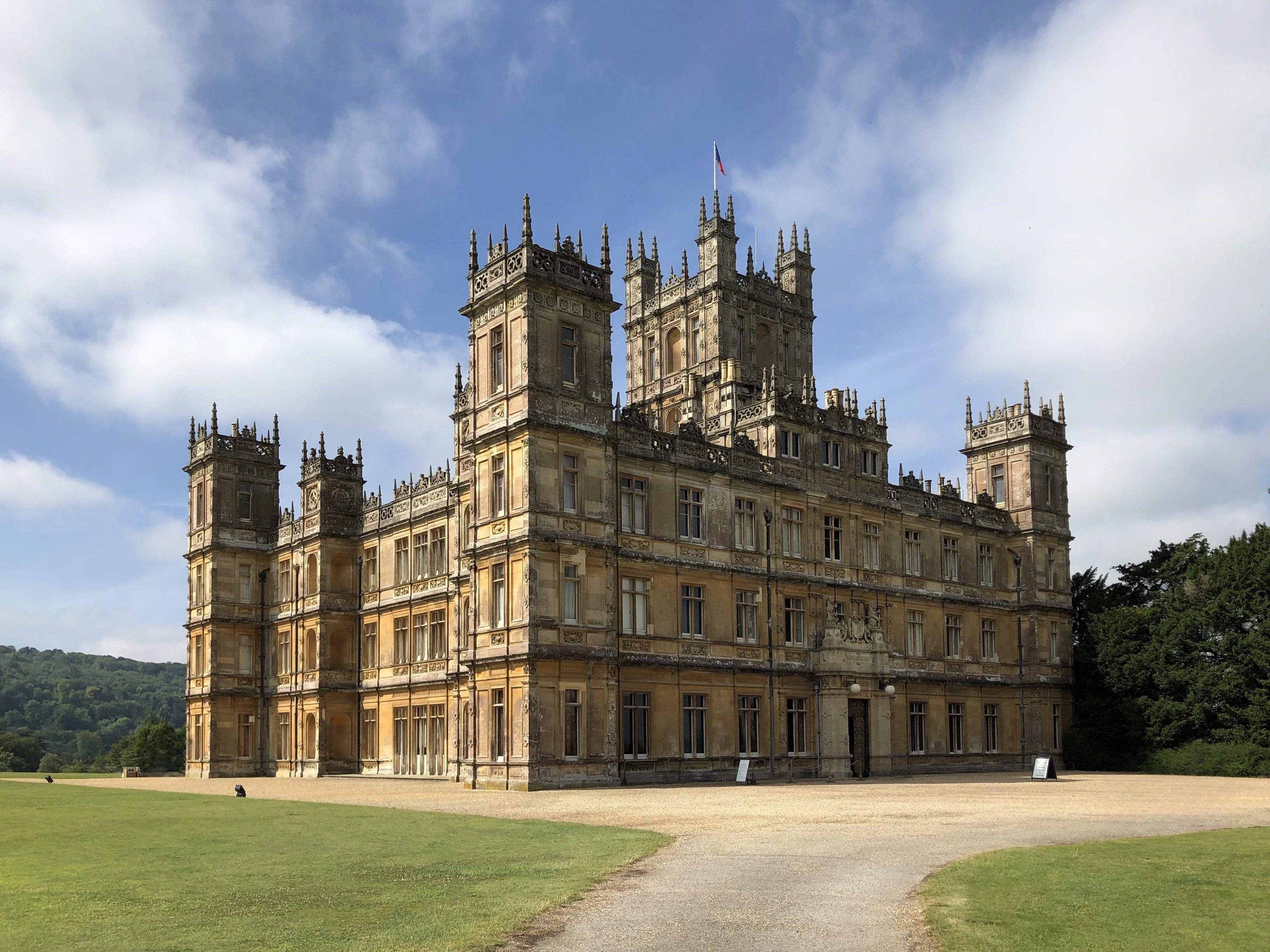
Highclere Castle found income in show business. When Downton’s producers approached the castle in 2009, it faced a repair bill of close to £12 million, with £1.8 million of it urgent. Lady Carnarvon tells the recovery differently from the popular version, in which a television series simply saves a castle.⁵
I heard Lady Carnarvon speak at Highclere a year ago. My friends and I dressed in our Downton-era finest and had tea and scones afterward, surrounded by fellow fans, mostly Americans.
Mapperton, Dorset
Today, I received an email announcing Stately, an online members club from the owners of Mapperton House, Julie Montagu. Stately is a membership club celebrating Britain’s historic houses, royal history, aristocratic traditions, and period drama.
Julie Montagu (Viscountess Hinchingbrooke) and her husband Luke built it after their followers, mostly in the US, told them the content lets people experience great houses when they can’t travel. For $9 per month, members get daily posts, period drama recaps, and original films, plus weekly episodes about the work of keeping Mapperton standing. I’m pretty excited to explore this as I continue to seek mental relief from the pressure of travel advising during festive season.
Stately is one of many revenue streams Julie has found for the house. Mapperton is a Tudor and Jacobean manor near Beaminster, the family seat of the earls of Sandwich, on a 1,900-acre estate. Julie and Luke took over stewardship in 2016, and Julie shares her daily life with hundreds of thousands of followers on Instagram and YouTube.⁶ Luke describes the central challenge as keeping the roof on “in the face of enormous, rising costs,” and the estate spends around £200,000 a year on repairs and maintenance alone.⁷
If you want to live out your Mapperton dreams, you can rent the whole house, nine bedrooms for up to 15 guests, for a limited number of weeks each year.⁸ If a buyout is out of reach, Grand Historic Tours runs a hosted stay for up to 12 guests, where Luke and Julie welcome you into the family home. It includes private viewings of the collections, guided visits to the gardens and woodlands, an optional yoga class with Julie, and private visits to two other stately homes.⁹ You can also book a self-catered estate cottage through Airbnb. Four-bedroom Coltleigh Farmhouse sleeps eight adults and two children, and Woodland Cottage, the former gamekeeper’s home, sleeps six.¹⁰
Perhaps recognizing the Dollar Princess comparison, Julie notes in her book, “Secrets of an English Country House,” that she finds a kindred spirit in Alberta Montagu, a Gilded Age heiress who became the ninth Countess of Sandwich.⁶ Julie, born on the outskirts of Chicago, styles herself an “American countess.”
Frampton Court, Gloucestershire
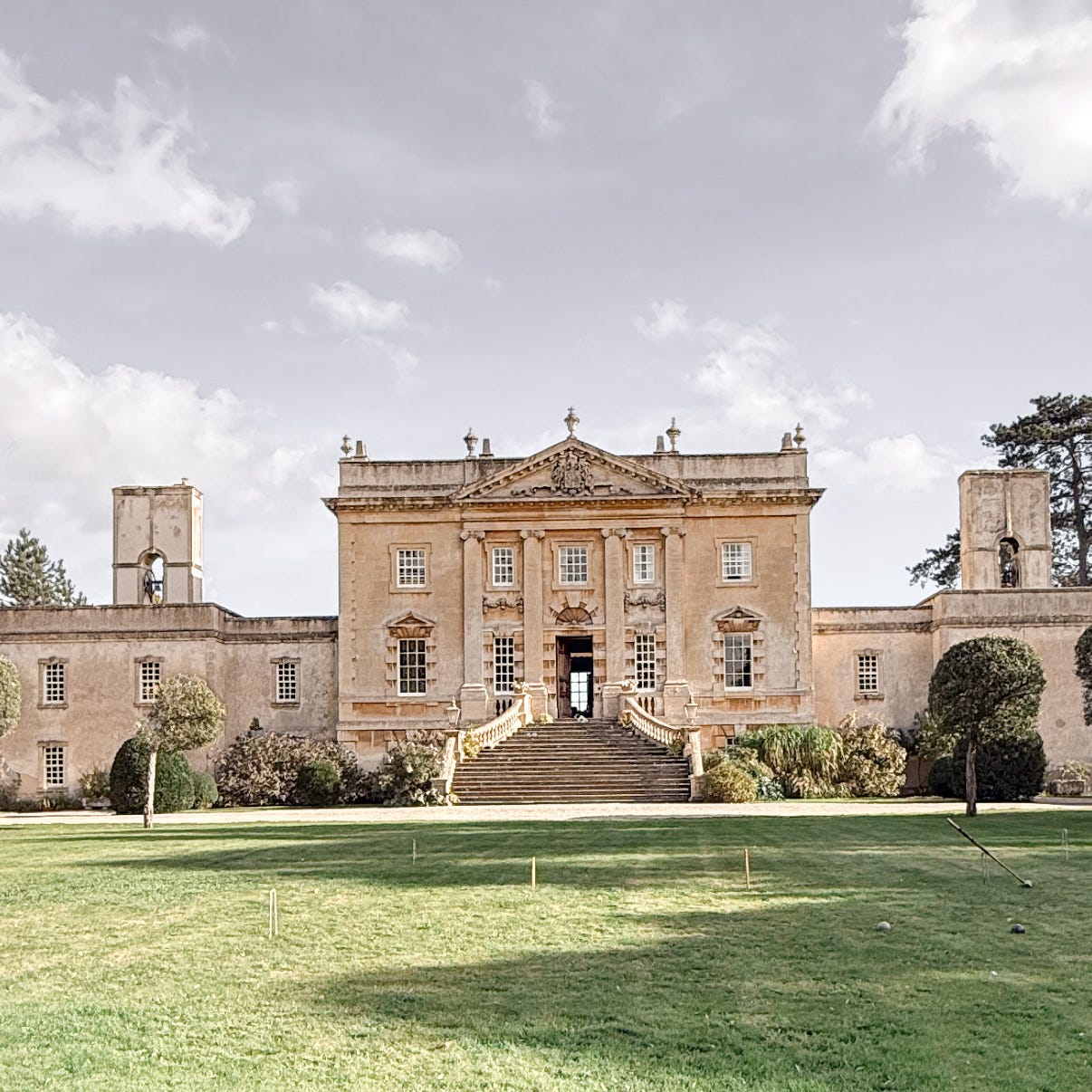
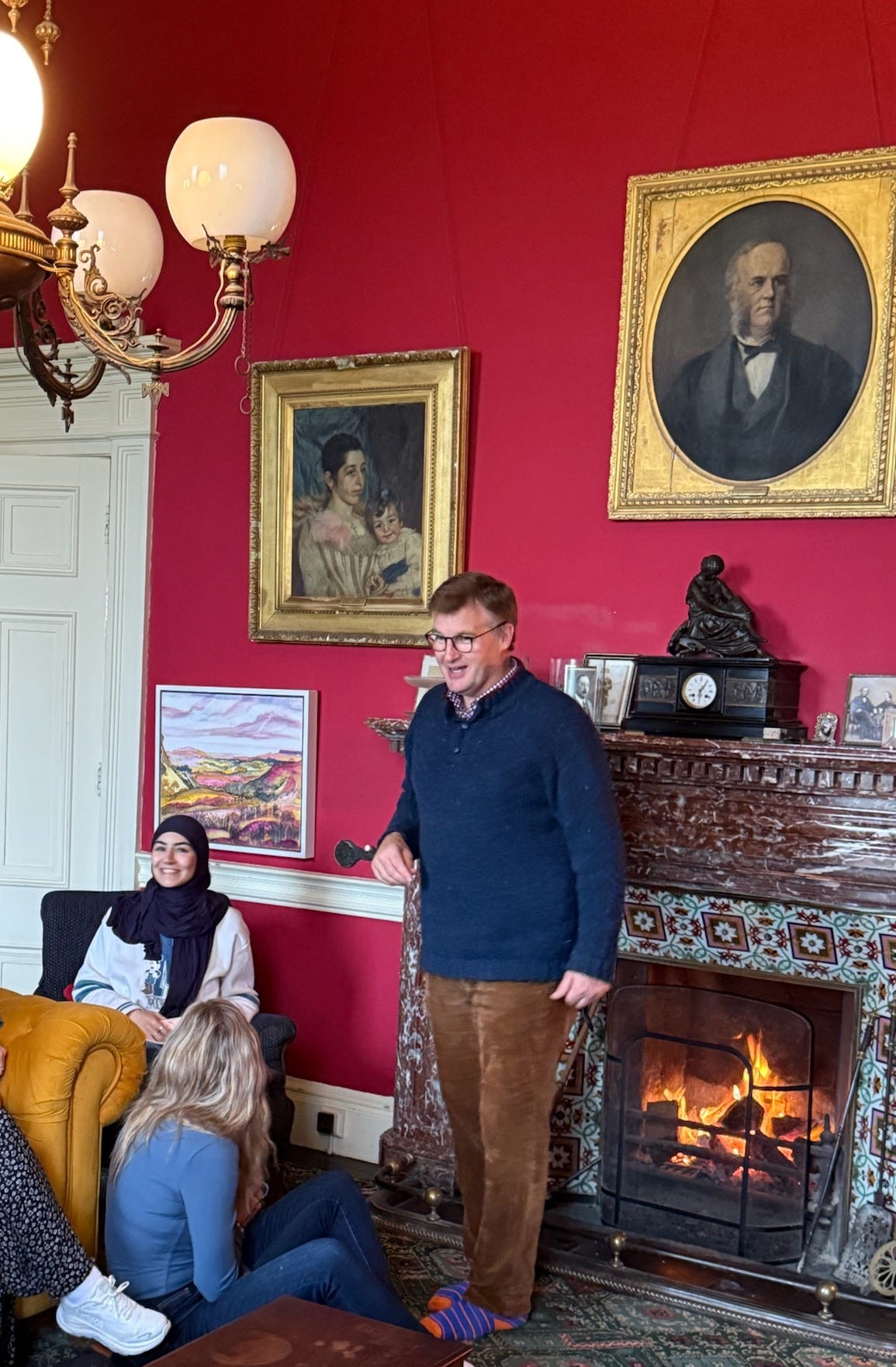
This October I stayed at Frampton Court in the Cotswolds. The Clifford family has lived at Frampton on Severn since the 11th century, and the Grade I Georgian house, built in the 1730s, anchors an estate of about 1,500 acres.¹¹ The family ran the house as a bed and breakfast for 15 years. After the first lockdown, they renovated it (Peter and Charlotte Clifford took turns sanding floorboards late at night), and relaunched it as an exclusive-use rental, advertised then from £3,100 for a minimum three-night stay.¹²
Today, Frampton Court sleeps 14 and is let as a whole house only. It has hosted a few Jane Austen adaptations, and the family rents the Orangery, Cyder House, and Wool Barn for weddings. Rollo Clifford, the present owner, lives with his wife Janie on the estate and gives group tours of the house.⁴ ¹¹
The house is lovely, full of cozy rooms to curl up in with a book by the fire. Rollo gave us a tour and showed us the museum of family artifacts he has gathered. Partway through, his dog brought him a decapitated pigeon, likely a fox’s victim from the night before. Ever the English country gentleman, Rollo wrapped it in a plastic bag and stuck it in his pocket, a casual carcass accompanying our tour for the next hour.
Inveraray Castle, Argyll, Scotland
At the Highclere talk, a visiting member of the aristocracy described her family’s own tourism project in Scotland. Inveraray Castle has been the seat of the dukes of Argyll since the 18th century, and the 13th duke, Torquhil Campbell, and his family live in private apartments on two floors. The estate covers 60,000 acres and earns income from commercial forestry, tenanted farming, wind and hydro power, deer stalking, and visitors. A fire in 1975 sent the 12th duke’s family into the castle basement (no, not former dungeons) for a time, and a worldwide fundraising drive paid for the restoration.¹³
Guests can stay too. Stronshira House, which overlooks the castle, sleeps 10 to 12, and Garron Lodge sleeps two.¹⁴
Temple House, County Sligo, Ireland
The Perceval family has lived at Temple House near Ballymote since 1665. The Georgian house overlooks the lakeside ruins of a Knights Templar castle, and the family expanded it in the 1860s.¹⁵ Roderick and Helena Perceval, the 15th generation, live on site and run the home with a team of about ten part-time and full-time staff.¹⁶
Running a mini hotel is not for the faint of heart. After seeing how much work overnight stays took, the Percevals stopped taking individual guests and now focus on larger groups and weddings from April 1 to November.¹⁷
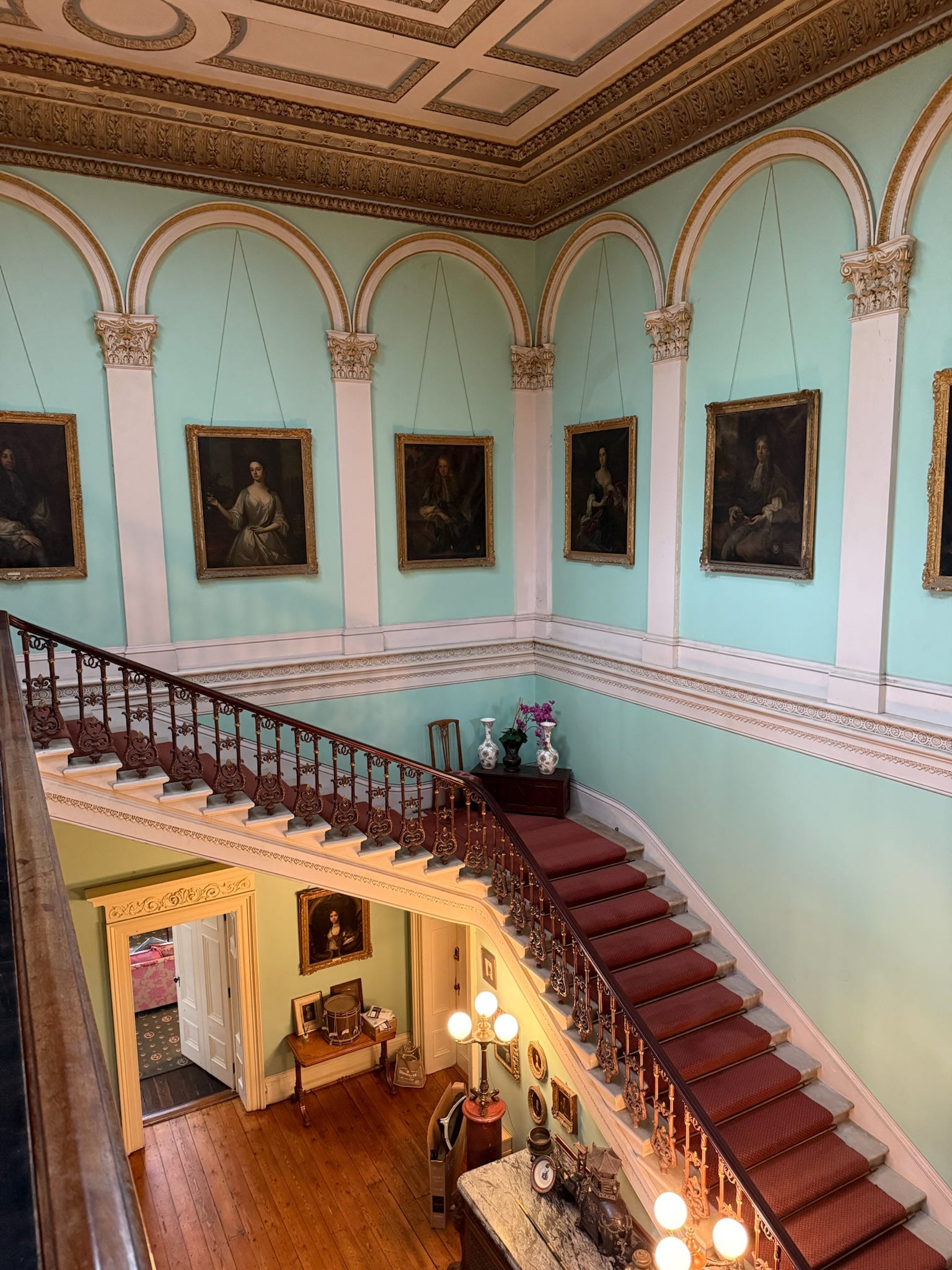
I rented the entire home for a poetry retreat a year ago, and it was amazing. We led poetry workshops by the fire among antiques, dined in the grand dining room at a table long enough to host a Gilded Age party, and slept in rooms right out of a Jane Austen novel. Roderick told us our group’s buyout helped finance ongoing roof repairs. I’m dying to go back with my family, and I have sent it to several clients.
More houses doing the same
I grew up visiting my parents’ friends, Lord and Lady Waterford (Tyrone and Caroline Beresford), at Curraghmore House in Ireland’s County Waterford. My father befriended Tyrone during polo tournaments in Honolulu, and he joined the annual pheasant shoot while my brother and I explored the nursery floor, collected eggs from the chicken coop, and got lost playing hide and seek in the many rooms throughout the house. In the evenings Tyrone wore a velvet sports coat and bow tie, and the ladies wore gowns. I wrote my college thesis there and was lucky enough to stay at Curraghmore for a magical month.
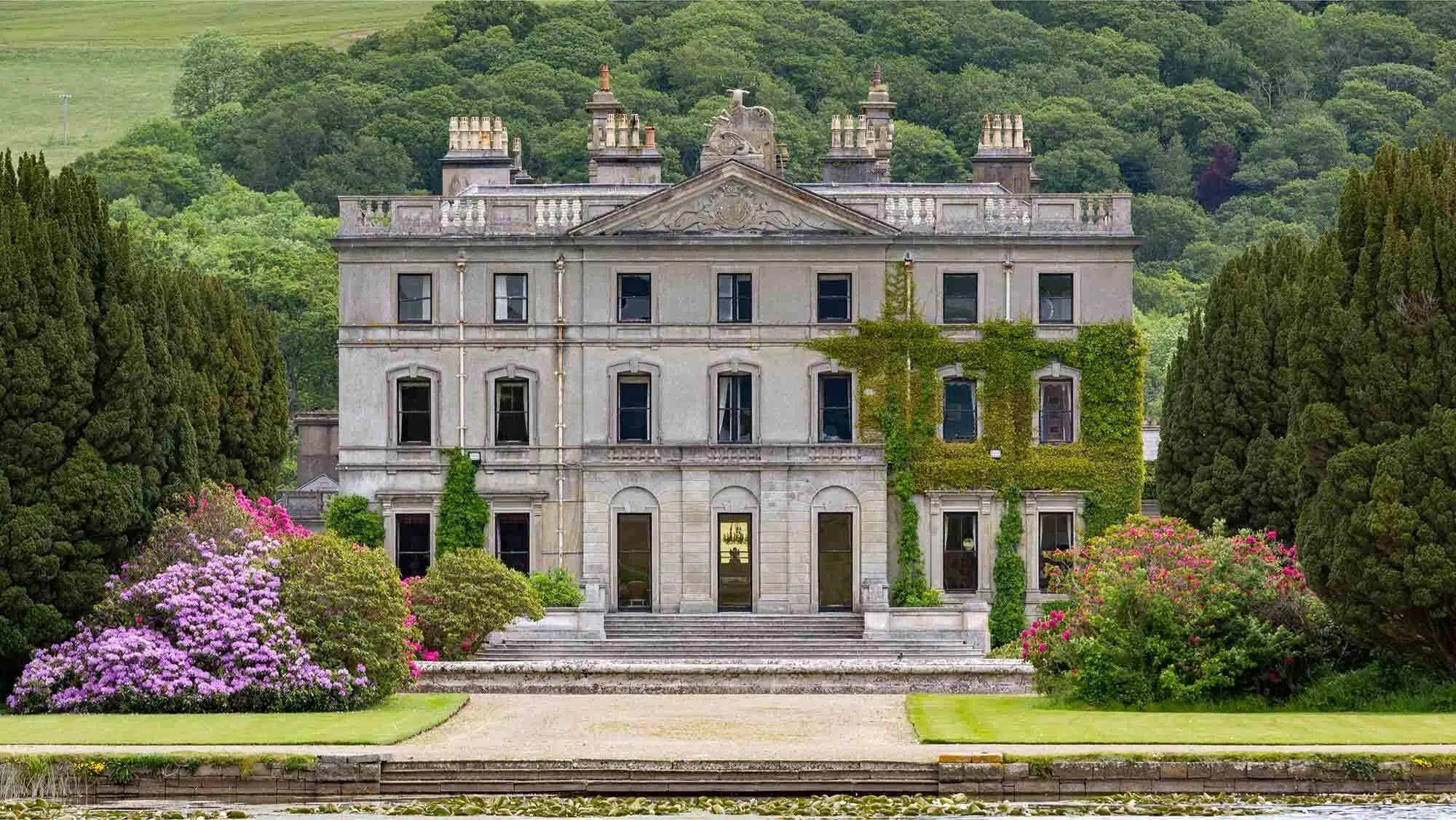
Tyrone has since passed away, and Caroline’s grandson, who is my age, has taken over bringing Curraghmore up to speed for visitors. Today the family sells private tours of rooms filled with antiques gathered over roughly 800 years, and you book by contacting the estate.¹⁸ They also hold annual pheasant shoots. One of the greatest sources of income comes from hosted a music festival on the grounds. The family is considering opening the house for private rental at a premium price but hasn’t pulled the trigger yet. I’ve offered my help advising them in their hospitality endeavor.
Spear’s lists several other houses in England and Scotland that have taken the next step.⁴
Carlton Towers in Yorkshire opens 16 bedrooms named after family ancestors for a limited number of nights each year.
Kinnaird Castle in Angus, home of the Carnegie family (no relation to Andrew), rents three apartments that sleep from two to 16 people.
Athelhampton in Dorset lets its Cochrane Wing to groups of up to eight.
Acton Scott Hall in Shropshire, in the Acton family for 900 years, offers bed and breakfast.
How the houses find guests
One of the hardest problems for these estates is distribution. A grand estate does not show up on a GDS like Sabre. Instead, houses rely on platforms like Olivers Travels, luxury advisors like me who have built these contacts over the years, and marketplaces like Airbnb.
Airbnb created a Historical Homes category for listings dating from the 19th century or earlier, and it counts almost 4,000 in the UK. The company says typical UK hosts in that category earned almost £10,000 in 2021, compared with just over £6,000 for hosts whose homes are not historical. Mapperton uses its own site, a tour company, and Airbnb together, and Frampton Court lets its Orangery, Cyder House, and Wool Barn alongside the main house.⁸ ⁹ ¹⁰ Many of these homes earn the largest share of their extra income from weddings, which provide a big lift in a short window. Weddings come with their own concerns, like noise and damage.
Another source of bookings for these properties comes from group retreats. As affinity groups like reading clubs grow in popularity, these homes have found social media marketing in the form of those group attendees. I stayed at Frampton as part of a women’s retreat, and will stay at another historic home next May as part of Molly Carr’s English Gardens retreat.
What to know before you book
Plan early, because many of these houses let rooms for only part of the year.
You may have to wire money directly to the owners, which can mean foreign transaction fees and a degree of risk. When I sent a wire to a Swiss bank account for a villa we rented in Lake Como, I told my husband, “well, we could show up with 16 people and this place may not exist.” These houses are difficult to vet.
Consider the time of year you travel and the lack of air conditioning in many old homes. Ask about private chef options and the distance to the nearest grocery store.
The houses in this issue cover their costs one booking, film set, tour ticket, and wedding at a time. Thankfully, American tourists appear eager to live out their old-world dreams.
If you are interested in booking any of these homes, reach out to me at AnneMarie@alpenglowtravel.com.
🗝️ The Lobby Bar
Hospitality updates, promotions, gossip, and the occasional pun
OpenAI bought an AI travel agent that launched five months ago. OpenAI acquired Odessia, the startup Sonder co-founder Francis Davidson launched five months ago, and Davidson is now working at OpenAI on the future of travel. Sonder failed spectacularly, so I’m interested to see how this one shakes out. Terms were not disclosed, TechCrunch says the deal looks like an acqui-hire, and the Odessia tool has been shut down, with no OpenAI travel product announced yet. I use AI in many aspects of my business, but I can tell you that these tools are not quite trustworthy enough to replace seasoned advisors like myself, so don’t hold your breath. (Dennis Schaal, Skift) skiftTechCrunch
Aman’s third brand comes with Novak Djokovic and a 2031 opening date. ATMA debuts with a Miami hotel, branded residences and an invitation-only club in a 1,049-foot Brickell waterfront tower, targeted for 2031. Djokovic leads the longevity, nutrition and wellness programming, and the wellness center runs 120,000 square feet. (Skift) skift
The FAA grounded every departing flight in the US on November 13. The stop lasted nearly four hours and was only the third nationwide ground stop in 25 years. FlightAware counted more than 5,700 cancellations that night, and airlines had already canceled 980 flights for Saturday. The FAA has not identified a cause. Can’t wait to hear WTF happened. (Meghna Maharishi, Skift) skift.com
Saudi Arabia is building 401 hotels while missile attacks keep foreign visitors away. The record pipeline adds 109,320 rooms, and this year’s openings are concentrated on the Red Sea coast, including Four Seasons, Rosewood, Six Senses and Raffles. The kingdom had 61.2 million tourists in the first half of 2026, up about 1%, against a Vision 2030 target of 150 million a year, and a Houthi missile strike on Riyadh’s airport killed 13 people. (Deepthi Nair, Skift) skift.com
Japan passed Italy as Virtuoso’s most requested destination for the first time. The 2027 Luxe Report draws on more than 3,100 advisors across more than 50 countries. The top five are Japan, Italy, France, Greece and Spain, and the top destinations on the rise are China, Antarctica, Iceland, Egypt and Norway. 53% of advisors expect leisure demand to rise slightly and 22% expect a significant increase, and Tokyo and Kyoto lead the city rankings, so book Japan rooms early. (Seatrade Cruise News) all inclusive to adventure the top experiences that will shape ultra luxury travel in 2027 +2
Sources
Wikipedia, Consuelo Vanderbilt
TV Insider, What Is a Dollar Princess?
Boodle Hatfield, Over 660 stately homes now rely on public visits, April 27, 2020
Spear’s, To the manor born: 7 best stately homes to hire, May 2024
Spear’s, Lady Carnarvon on Highclere Castle
Quarto, Secrets of an English Country House
Hello!, Viscount and Viscountess Hinchingbrooke Mapperton House tour
Mapperton, Stay at Mapperton House
Grand Historic Tours
Airbnb listings: Coltleigh Farmhouse and Woodland Cottage
Frampton Court Estate, Stay at Frampton Court
Country Life via Magzter, One night stand
Wikipedia, Inveraray Castle
Inveraray Castle, Holiday Houses
Temple House, History
The Irish Times, When the big house becomes a guest house
Irish Historic Houses, Temple House, Ballymote
Curraghmore House, Private Experience
I’m currently watching Downton Abbey, and the Gilded Age is on my list! I assume you have toured the mansions in Newport?
The last minute compression is real. This is how my brother has always planned and it drives me wild to have no plan and MAYBE save $100 or sacrifice the best inventory. You and I also talked about discovery of these special places, and where the GDS is NOT helpful for advisors in this space - but niche sales orgs like Virtuoso or Signature might be. In any case; yes I’d stay in a castle, and yes I did in Ireland 🤣❤️