


In Case You Missed It:
Travelers,
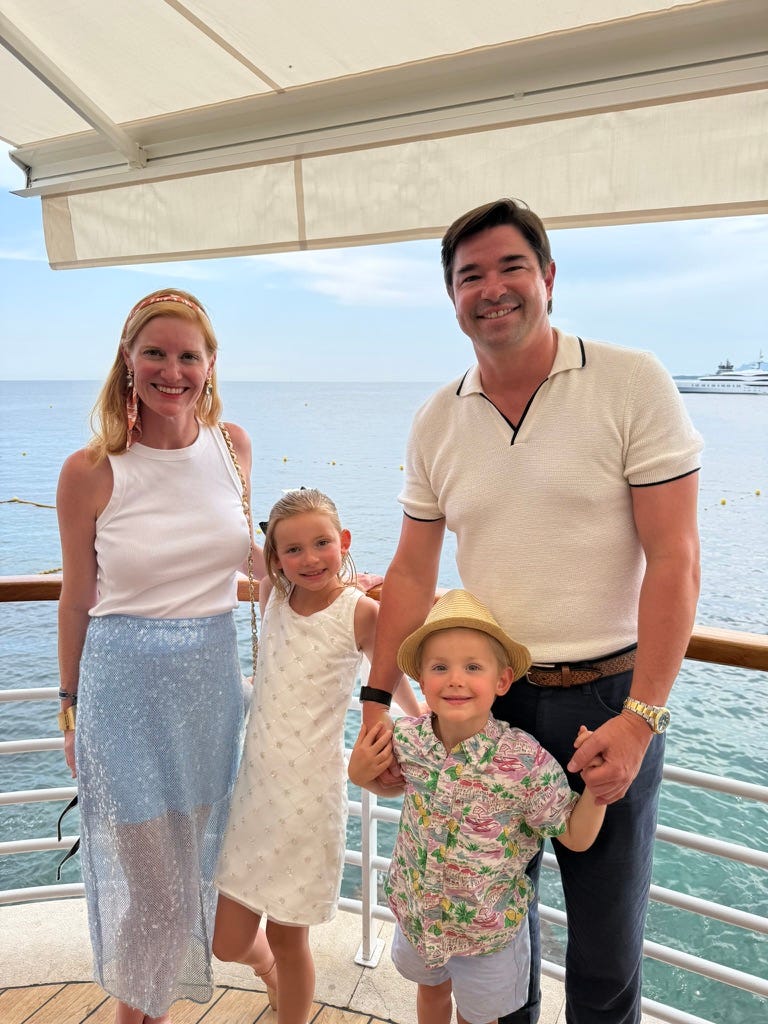
Thanksgiving week has me reflecting on what I’m grateful for, my family, and the travel opportunities I have because of my parents. I don’t remember my first international trip. I was an infant, and my parents bathed me in a hotel sink in Japan.
Over the years, they took me to Ireland, London, Turkey and Greece on a boat, Paris, Australia and New Zealand, Africa, and rented a chalet in Gstaad for a summer.
We lived in Honolulu, so these trips were not an easy jaunt. Some of it was work travel as my parents expanded our family’s hotel company, but much of it was simply to explore.
The travel bug bit me early, and when asked about my hobbies, “travel” spills from my lips before “skiing” and “mahjong.”
My toxic trait is that I start planning trips while I’m on a trip. There’s something addicting and glorious about booking a trip, deciding what I’ll bring, putting the pieces together like a Rubik’s cube. I love waking up in a new city, a new hotel, the day stretching before me filled with possibility.
My extended family comments passive aggressively, on my travel schedule. “Oh, you’re home! I can never tell from your Instagram.” I can’t quite parse whether there is judgment or curiosity behind it.
I lost my parents four years ago, and learned quickly that life can end in an instant. We are never promised a tomorrow or a someday. I’ve always had restless feet, but watching the estate company catalogue and itemize every item in my parents’ home, I heard the echo of my father’s voice: “He who dies with the most toys still dies.”
Ever since, I have traveled as if I’m running out of time.
I want to live a big life. I want to see as much of the world as I can, while I can.
My body often disagrees; jet lag hits me hard no matter how used to it I’ve become. The cost also shows up at home. When I can, I bring my children, my Bougie Bunnies. This week’s Upgrade is about how difficult European hotels make that endeavor. But, there is school, and ballet, and karate, and soccer. When I jump from conference to hotel FAM trip, I miss friends’ birthday parties and my kids’ soccer games. After being gone most of October, my family mutinied and I had to cancel a conference.
I remember this period of my father’s life. He came directly from the airport, still in a suit, to catch the second half of my soccer game when I was in 8th grade.
I know this time with my kids is short and precious. I read to them every night and breathe in the smell of their shampoo and wet hair. I also know I watched my parents build a company and work in jobs they loved. From them, I learned to love traveling the world and to devour every incredible moment I can. I want my children to have this same drive to learn what exists beyond our little bubble, and to know that they, too, can build a career they love.
Give me long dinners with tiny courses, meandering walks through small streets. I crave early morning game drives watching elephants move soundlessly through wet grass, murmurations of starlings at sunset over city roofs. I collect martinis in dark lobby bars with piano players and velvet banquets, crisp sheets and room service lattes sipped while still wrapped in a robe.
As my calendar fills with trips next year, I am so incredibly grateful for the travel opportunities I have both by virtue of what I inherited from my parents, and due to my career in travel. Simultaneously, I wonder what I’ll miss at home. My children greet me with arms flung wide and cries of “what’d you bring us,” which I know just means “we missed you.” My family reminds me that “children don’t keep.”
I try imagine if I go the way of my mother, if my light goes out in an instant, what will I regret?
At home, I am many things to many people: employer, mother, laundress, control tower, friend, travel agent.
When I travel, I am whoever I want to be, entirely for myself.
This Thanksgiving, I am grateful for curiosity, for children who would rather get a trip than a toy for their birthday, for a husband who lets me cast off without (much) guilt, for a career that gives me the reason to go, and for a body that, for now, allows it. And I’m grateful for all of you who read my essays every week, who comment on my work, who love travel and hotels and economics and welcome my emails into your inboxes.
I do not take these gifts lightly. I am grateful for this big life and this big world, but most of all for the people who give me a reason to come home.
Happy Thanksgiving, Happy Travels,
Anne Marie

🗝️ Pre-Departure — Hospitality Hot Takes
Why European Luxury Hotels Make It So Hard to Fit a Family of Four in One Room
I travel frequently with my two kids, ages 6 and 8, whom I affectionately call my Bougie Bunnies. They will happily eat caviar (mostly the blini pancakes that accompany it), have strong opinions about the timing of housekeeping, and often accompany me onsite inspection tours. However, they are not quite old enough to yet be trusted in a room on their own. Once, my daughter Malia locked herself in a room with a pin lock, and Jack has been known to call the front desk just for a chat. That relegates us to suites with a bed for my husband and me and a pull-out couch for the kids.

In the US, we can usually find rooms with two queens, with the kids in one and us in the other. That configuration is much rarer in Europe. If you are a Millennial parent with several children, you know the distinct pain that is trying to find a hotel room that fits four at a five-star European hotel.
As a luxury travel advisor who works with a lot of families who, like us, travel with children, I am mystified at how difficult European hotels make it for families of four or five to sort out room configurations.
Instead, many hotels in Europe cap a room at three people, even suites or enormous rooms. Should you be willing to fork out for a second room, connecting room options are few – and will rarely be guaranteed. You therefore run the risk of your Bougie Bunnies jailbreaking in the middle of the night and wreaking havoc in the corridors.
In my early days of travel advising, I postulated that this was entirely driven by the hotel’s desire for more revenue. That may be in the situation in some circumstances.
However, I’ve discovered that in most cases, the hotel isn’t lying to you. While they really aren’t trying to sell you a second room out of greed, these cultures tend to be more scrupulously rule-observant than Americans. While Americans live in an individualist society and are comfortable asking for accommodations, many cultures in Europe tend to be more collectively minded. In the US, “the customer is always right” is drilled into luxury hotel staff. In Europe, not so much.
For the purpose of this week’s The Upgrade Weekly, I dug into the reasons luxury hotels cap their occupancy, even in large suites, at three travelers in some of my clients’ most popular family destinations.
The short answer is that it comes down to regulations, fire codes, and staff willingness to bend the rules.
Italy’s Occupancy Math Is a Staircase of Thresholds
Italy sets hotel room sizes through a combination of national fire and safety rules and regional hygiene statutes. Each region legislates its own version, but nearly all of them use the same baseline requirements.
The minimum requirements specify 8 square meters for a room with a single bed and 14 square meters for a two-bed room.
The law allows supplementary beds only in rooms built for two, caps them at two extra beds per room, and requires an additional 6 square meters for each one. Hotels seeking 4-star or 5-star classification add even more space on top of these amounts.
The law doesn’t designate one occupancy number per room, which is incredibly confusing. Instead, it builds a staircase, and a room earns the next step only once it clears that step’s square footage:
14 square meters: a legal double, two people
20 square meters: a double plus one supplementary bed, three people
26 square meters: a double plus two supplementary beds, four people
If a hotel caps your room at three, the room likely measures somewhere between 20 and 26 square meters, past the first threshold but short of the second. A room at 21 square meters can legally hold three people. Anything under 26 cannot legally hold four. That five-square-meter gap, roughly a closet’s worth of space, is the entire difference between the hotel that says three are allowed and the one down the street that allows a family of four.
Yes, most hotels count babies as an entire grown person in this equation.
This also explains hotels like Sonnwies (now San Sonnea Family) in South Tyrol, which regularly sleeps a family of five. Its larger units are two- and three-room suites with a separate, connecting children’s bedroom, and that connecting room has its own base square footage as its declared sleeping space.
These are a handful of hotels that fit families of four.
Rome
Hotel de Russie, Two-Bedroom Family Suite Garden View: 100 sq m, 4 guests. The “Family Junior Suite” is a combination of two suites. roccofortehotels
Portrait Roma, Family Accommodation Terrace: 109 sq m across two levels, up to four guests. lungarnocollection
Palazzo Manfredi, Family Suite: 50 sq m with two double bedrooms and two bathrooms, up to 4 guests, Colosseum views. I found this one while checking, and it isn’t in my earlier list. manfredihotels
Florence
Portrait Firenze, Family Suite: 58 sq m, max occupancy 4, with a separate bedroom and a sofa bed. lungarnocollection
Portrait Firenze, Portrait Suite River View: 85 sq m, up to four guests, two marble bathrooms. lungarnocollection
Lake Como
Grand Hotel Tremezzo, Terrace Garden Suite: 550 sq ft, 2 adults and 2 children, with a private terrace. The kids need to be 12 or under. grandhoteltremezzo
Mandarin Oriental Lago di Como, Two Bedroom Family Suite: 185 sq m, a king bedroom and a queen bedroom, two bathrooms. mandarinoriental
Villa d’Este, Cardinal Suite: 108 sq m, max 4 guests. villadeste
Milan
Portrait Milano, Portrait Suite: 77.5 sq m, max occupancy 4, with a king bedroom and a sofa bed in the living room. lungarnocollection
Ireland Includes Number Directly in a Law
Ireland has the most literal statutory cap of the countries I researched. Fáilte Ireland’s Registration and Renewal of Registration Regulations for Hotels 2016, issued under the Tourist Traffic Acts, sets a minimum gross internal floor area for each registered room type: 12.5 square meters for a single, 14 for a double or twin, 18 for a triple.
Any property calling itself a hotel in Ireland has to hit these numbers to register that room category in the first place. There is no registered category for “quad” rooms, so a family of four in Ireland is generally directed toward connecting rooms or a suite.
Ashford Castle does have some rooms that accommodate four, but make sure to check upon booking.
France Counts Sleeping Capacity, Not Just Square Meters
France layers three systems on top of each other, and they work differently from Italy’s staircase.
Star classification:
Minimum room dimensions come from the hotel star system under the Code du Tourisme, most recently the arrêté of December 29, 2021, which Atout France administers. Minimum double room sizes climb with the star rating, from around 9 square meters at one star to roughly 24 square meters for five stars.
The classification sets a maximum number of people per room and ties the required area to that number. It is technically voluntary, but nearly every commercial property carries stars because guests expect them.
Under this system, a suite means either a single room of at least 60 square meters or an apartment with a separate bedroom and living room. A sofa bed does not count as a bed for classification purposes.
Fire code:
Hotels fall under the ERP (Établissement Recevant du Public) Type O fire safety rules. The fire code calculates an “effectif,” a total headcount for the entire building based on the sleeping capacity of every room, and that number sets requirements for stairwells, detection systems, and evacuation planning. From what I found, the default count is two people per room, and apartments count at whatever capacity the hotel declares. After an inspection, the local safety commission records the hotel’s approved capacity, including its sleeping capacity, in its official report.
The hotel’s own policy: On top of both systems sits whatever extra-bed policy the individual hotel sets.
Put together, a French hotel room sleeps the number of people the hotel has declared for it, and that declared number is what the fire plan, the insurer, and the front desk all work from. Square footage alone doesn’t decide it.
I have largely taken an “ask forgiveness, not permission” approach to fitting my two kids in suites in Paris that say they only fit three people, but I wouldn’t recommend this approach with clients as it’s unpredictable. Parisians love to say “it’s not possible” when asked to accommodate basically any request.
England and Wales Set No Number at All
This is the outlier of the four countries I researched. The AA and VisitBritain’s Common Quality Standards score hotels on a percentage basis across amenities, service, and upkeep, and I couldn’t find a published minimum square footage attached to any star tier.
The fire law governing hotel safety, the Regulatory Reform (Fire Safety) Order 2005, doesn’t specify an occupant number either. It puts the responsibility on each hotel’s own fire risk assessment, built around escape routes and door ratings, to decide what a room can accommodate.
England and Wales are the only one of these four systems with no external body setting a floor on room size or a ceiling on occupancy. Every number you get quoted there is a call the property made on its own.
When the Room Is Big Enough and the Answer Is Still No
Katherine Malinosky (@theluxurywifestyle on IG and Katherine Malinosky on Substack), recently posted an Instagram Reel that shows this problem better than I can. She was planning a ski trip to Airelles Courchevel in the French Alps with her daughters, ages 3 and 7. She has stayed there previously. When she went to book again for this coming winter, the hotel would not grant the exception to put her family of four in a room together.
Katherine told me the room in her video is the one-bedroom suite the hotel allowed her family to stay in last winter, measuring 65 square meters. It has a large living room with a pull-out couch, a separate bedroom, and a dressing room, or more than enough room to accommodate two small kids and their parents.
This time around, the hotel quoted it for two people and proposed adding a connecting Deluxe Room of 32 square meters.
The quote was 5,300 euros a night for the suite and 3,300 euros a night for the connecting room, both half-board. That comes to 8,600 euros a night for a family of four, in a suite with more than enough floor area to sleep them.
At 65 square meters, that suite clears every threshold in this piece. In France, the limit most likely sits in the hotel’s declared sleeping capacity. As I understand it, the suite is probably filed at two people and the Deluxe Room at two more. Selling four in the suite would exceed what the hotel declared to its safety commission, pull-out couch or not. Raising that number means redeclaring, and it can change the building’s total headcount, which drives its safety requirements. That is a lot of paperwork for one suite. Selling two rooms gets a family into the same physical space with no refiling.
She also booked last season a few weeks before travel, and she wonders whether booking last minute gives a hotel more flexibility to make an exception. Booking for March several months out, the hotel probably does not know what its total submitted headcount will be over those dates.
It could also just come down to whoever was answering email at the time not wanting to do extra work. We often heard that favorite French refrain, “It’s not possible,” during our ten days there with our kids last summer.
Katherine’s question is the one I hear from clients: why does a suite with a living room and a separate bedroom not sleep two parents and two small kids?
Let’s count the reasons hotels give from my research above:
Declared sleeping capacity: Hotels register how many people each room category sleeps with their licensing authority and their insurer, which follows the beds the hotel declared, not the floor area. A 30 square meter room filed as a double remains a double, no matter how much space you can see. Many older buildings never refile because the paperwork involved is not worth the effort.
Pull-out couches: A sofa bed may not count as a “declared sleeping place,” so a living room with a couch adds no legal capacity at all.
Extra bed limits: Many hotels cap extra beds at one per room, even where local law allows two. Others only stock a cot or a single rollaway. Kids aged 6 and 8 fall into the gap: too big for a cot, and the hotel won’t put two rollaways on the floor.
How they count kids. Some hotels count any child over 2 or 3 as a full occupant. Others use a higher age cutoff. These age cutoffs seem arbitrary and up to the hotel.
Evacuation plans: The fire plan and headcount are related to the bed configuration the hotel filed. Adding people the plan does not account for puts the hotel out of compliance, even in a large room. Katherine noted that it’s safer in the case of a fire for small kids to be with their parents, and I agree. However, the French bureaucracy loves a rule for its own the sake, so hotels enforce them without questioning whether they make any sense.
Revenue. A family in two rooms pays more than a family in one. I always say in the Upgrade – follow the money. If a hotel like Airelles knows that room will sell out and they aren’t worried about losing a sale, they have little incentive to bend the rules.
Katherine made one more point about revenue that stuck with me. She thinks hotels hurt themselves when they set their own limits and make a family book two rooms. I tend to agree. Luxury hospitality is rarely about the picture-perfect stay, and more about figuring out how to get to “yes” for a client as much as possible.
What This Means When You’re Planning a Trip
European luxury hotels often occupy renovated older buildings that did not consider families as guests. Europe is the origin of the “children are to be seen and not heard” concept, and in some areas, luxury hotels haven’t caught up to the trend that wealthy travelers want to bring their kids along and those Bougie Bunnies matter much more to the hotel’s bottom line in client loyalty than rigidly sticking to (sometimes outdated) rules.
European hotels need to catch up to this growing market. In Virtuoso’s July survey of almost 800 advisors, 69% said multigenerational and family travel led the trip types that clients are asking for more of, and year-to-date sales at its preferred European hotels were up 39% through June. In the Family Travel Association’s 2023 survey, 76% of respondents planned to travel internationally with their children within two years, and Europe was the most popular continent, with Italy in first place.
Now, as multi-generational and millennial families increasingly bring young kids along for the ride, hotels need to adapt. Some are building more lock-off options to connect rooms, such as Covent Garden by Firmdale in London. Others, like San Sonnea, are designing rooms from the start with the square footage to accommodate families.
For many travelers, these restrictions are driving them to Airbnbs and rentals instead of hotels. If these European destinations want to slow the spread of Airbnbs, they should look first at loosening regulations as family travel keeps growing.
Those families will keep coming, and they will book the property that sleeps all four in one room. Hotels that refile their declared capacity, build lock-off suites, or train reservations teams are making informed decisions about accommodating families of four in rooms that can clearly fit them. The rest will keep sending it to the rental down the street.
The Lobby Bar
Hospitality updates, promotions, gossip, and the occasional pun
The Park Gstaad has reportedly sold to Greek shipowner George Prokopiou. The estimated price is CHF 350 million to CHF 400 million, and the seller is reported to be Dona Bertarelli, who took over the hotel in 2003. Neither side has confirmed the deal, and Four Seasons is set to operate the hotel as The Park Gstaad, A Four Seasons Hotel when it reopens in summer 2027. (Greek City Times)
Accor is buying out Ennismore’s minority investors for about 1.6 billion euros, and the IPO is off for now.The deal values Ennismore, the parent of The Hoxton, SLS, and Mondrian, at about 3.7 billion euros, with founder Sharan Pasricha staying on the board. Accor will buy the stakes in three tranches through January 2028. (Sean O’Neill and Luke Martin, Skift)
Air travel took hits on both sides of the Atlantic this week. A weight-and-balance system outage at Delta delayed more than 1,400 flights on Sunday, and Brussels Airport canceled all 429 flights on Monday from 7 a.m. to 9 p.m. during a national strike, affecting about 59,500 passengers. US schedules returned to normal the week of Nov. 16 after the Nov. 13 ground stop, which led to more than 18,000 cancellations over that weekend, so check your airline app before you leave for Thanksgiving travel. (Yahoo News, Al Jazeera, WSAZ)
PS is taking its members-only airport terminals to Paris in early 2027. The company opened terminals in Miami and Dallas in the past six months and already runs one at LAX, where a one-time visit to the Salon costs $1,295 and annual memberships run $1,250 to $4,850. Private suites cost an additional $3,650 or $4,950 for four people. (Vanity Fair)
A Dutch butler school charges 12,750 euros for eight weeks, and its graduates are in short supply. The International Butler Academy in Simpelveld trained a cohort of 20 students from 15 countries, and only about two were expected to be ready for top-level posts at graduation. The rest might start on cruise ships, in hotels, or as footmen, and pay at the top can reach upwards of $100,000. (Imogen West-Knights, Otago Daily Times)
New York playwrights are setting plays inside the city’s restaurants. The article names a Fitzgerald fight at Chumley’s, a blind double date at Casino, and a 25-seat playhouse above the Ear Inn, plus The Restaurant Diaries by Kyle Beechey at Casino. (Annie Armstrong, Caper)
The trip planning while on a trip is me! But I find it relaxing and excited for the next thing!
This is such a useful breakdown, especially the Italy thresholds. It explains why a family of four often ends up in a rental or a residence instead, even when they would happily pay for the hotel. Once two rooms are needed, the math and the feeling of the trip both change.