

🗝️ THE UPGRADE WEEKLY
May 26, 2026
In this week’s issue:
• Pre-Departure – You Can’t Sit With Us. Behind the membership club play creeping into luxury hotels
• The Room Report – Swanning About At Estelle Manor
• The Lobby Bar – Michelin Pulls Green Star, Raffles Going to Courchevel, Four Seasons Gstaad Coming Back, Conde Nast Wants to Go Shopping With You, AI Not Yet at Check-in, TikTok’s Now Doing Bookings, Will AI Soon Be Booking Your Hotel?
Travelers,
I confess that I was denied admission to the Tuxedo Society last year. My husband was thrilled at the slight. My fragile ego was briefly bruised, but the reason they gave was that I’m too old…at 40. I didn’t worry about it too long because I’m more fabulous at 40 than ever. If you haven’t heard of the Tuxedo Society, they are a membership club of 20- and 30-somethings galavanting about Europe for events/photoshoots in the Old-Money European style. Are they “old money?” TBD. My bank balance and pedigree didn’t matter, but being superannuated did.
So, what’s a girl to do when turned away by such a club? I began researching other options and went down the membership club rabbit hole. As a hotelier, this naturally led me to examine the hospitality industry angle – specifically how luxury hotels are trying their hand at creating such clubs within their (usually) welcoming walls.
This week I’m breaking down the hotel membership club boom and highlighting how Estelle Manor is handling it.
Happy travels! Anne Marie
Co-Founder, Alpenglow Travel
Check out previous editions of The Upgrade Weekly:
🗝️ Pre-Departure — Hospitality Hot Takes
You Can’t Sit With Us: The Hotel Membership Club Boom
The unabashed exclusivity of private membership clubs has long been a source of fascination for me. Carson Griffith writes Rich People Shit, a Substack I enjoy that covers cultural capital and the systems that produce it. She wrote about membership clubs in her Hollywood Reporter article of May 13, 2026, titled “Has New York Hit Peak Members Club?”
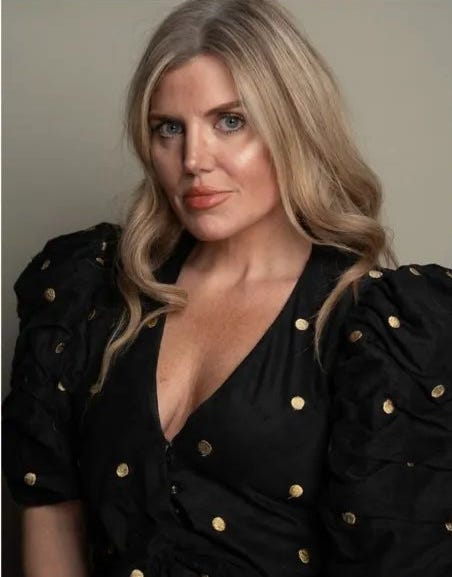
Carson Griffith is a journalist, editor, and ghostwriter whose bylines appear in The New York Times, The Wall Street Journal, The Financial Times, and across the top titles at Hearst and Condé Nast, where she held senior editorial roles. She has ghostwritten five books, two coffee table volumes, and speeches for political figures, Fortune 500 executives, and celebrities. Her reporting is grounded in close observation and primary sourcing — she writes from direct experience of the financial and cultural realities she covers, including the economics of taste, the mechanics of modern wealth, and the private economies that rarely make the news.
Griffith notes that private members clubs are not a new idea in New York. The Union Club, the Metropolitan Club, the Colony Club — these Gilded Age institutions date back more than a century, with application processes that took years and dining rooms that functioned more like urban country clubs. Soho House changed the pace when it landed in the Meatpacking District in 2003, which I will get into later.
Post-pandemic, the floodgates opened: Zero Bond, Casa Cipriani, Aman Club, ZZ’s, Colette, San Vicente, Maxime’s, each one staking out a slightly different corner of the market. London, the city New York largely borrowed the model from, has more than 130 members clubs according to a 2025 report in The Hollywood Reporter. 1
Now more than ever, we are a society craving community — but a curated, rarified type of community. The club founders Griffith interviews nod to the collapse of third places and a loneliness that social media made worse rather than better.
On a recent podcast episode of On with Kara Swisher, Jeff Klein, the founder behind San Vicente Bungalows and a handful of other highly coveted private clubs, stated that the product is not food, drinks, or hotel rooms. Those are “delivery systems” for the real product, which is a sense of belonging and psychological safety. He posits that membership clubs create an environment built for interesting, socially additive people who value discretion, curiosity, and creativity. The clubs he builds enforce a strict no-photos, no-phone-calls policy. In a world where the new status signal is the luxury of being offline and unreachable, membership clubs with strict no-cellphone policies are the peak symbol of sophistication.
Hotels, despite being a glacially slow industry to adapt to new technology, are masters at designing a “sense of place” and a “feeling of belonging.” Hotels are a place to see and be seen by the right people, and so are clubs. In the past few years, hotels are jumping into the club membership arena, with all its velvet chairs, moody lighting, crisp caviar martinis, and exclusive clientele.
Are these membership clubs the future of ancillary revenue for hotels?
In discussing this hotel foray into the membership club space with me, Carson Griffith noted, “Hotels have always had a guest problem. You check in, you check out, and if the experience was great you might come back once a year. A members club solves that. Suddenly you have people who are paying you every month whether they show up or not, and when they do show up they bring exactly the kind of people you want in your lobby. The waitlist is the marketing. That’s a very different business than selling rooms.”
Why Hotels Are Getting Into the Club Business
There isn’t much data tied to hotel-aligned membership clubs just yet. However, when examining the total membership club market, we find that the global private members’ club market reached $31.7 billion in 2024 and is projected to grow at 7.2% annually through 2033, reaching nearly $59 billion. It’s important to take these statistics with a grain of salt, because so many clubs are private and don’t report revenues publicly, so that $31.7 billion figure likely undercounts the actual market size. 2
For context, the broader luxury hospitality market was valued at $154 billion in 2024 and is expected to surpass $218 billion by 2029. If those membership club growth estimates are correct, it makes sense that hotels would want a piece of the action. 3
Just like the farm hotels I profiled in my previous edition of The Upgrade, membership clubs are a TRevPAR (Total Revenue Per Available Room) play, aimed at boosting ancillary revenue past heads in beds. If you can sell spa memberships, social memberships, and golf memberships to locals who never sleep in your beds, you’re generating revenue independent of occupancy. Post-pandemic, after two years of watching geopolitical instability wreck forward bookings, building a local revenue base is a smart move for the luxury hotel set.
“What’s interesting is that the pandemic really exposed how vulnerable the hotel model is: when travel stops, everything stops,” says Griffith. “A members’ club is a hedge against that. You have local members coming in for everything from dinner to drinks to events. The building stays alive at all times. I think hoteliers looked at what Soho House built and realized the members were the asset, not the rooms.”
The generations driving this boom are primarily Millennials and Gen X. We are also seeing an increase in corporate spending for business networking, as return-to-office mandates again push executives to conduct business away from home. Who wants to attend a meeting under fluorescent lights in a conference room? Take me to lunch at your private hotel members’ club, and maybe I’ll consider that LP investment in your new hotel concept.
Demand signals are hard to ignore
Hotels are jumping into membership clubs because demand points full steam ahead. About 63% of clubs boosted their membership counts in 2022, and 62% had a waiting list for prospective members at the end of 2022 and into early 2023. 4
The Soho House waitlist currently exceeds 100,000 applicants, meaning a prospective member can expect to wait four to five years. Annabel’s in Mayfair maintains a waitlist where six years is considered normal. 5
Soho House as Both Industry Darling and Cautionary Tale
Soho House has been the one to watch. Their Americas segment is the company’s largest revenue generator, encompassing US Houses, stand-alone restaurants, and management fees. Soho House New York, a 45,000-square-foot property, offers hotel bedrooms alongside its club spaces and restaurants. Membership starts from $950 quarterly, so we are not talking huge dollars here. In contrast, Exclusive Resorts, the luxury travel club I worked for previously, required a deposit of $100,000 to $500,000 on top of annual dues ranging from $20,000 to north of $60,000.
Soho House grew from 30 properties in July 2021 to 41 in July 2023, while membership jumped from under 112,000 to over 176,000 in that same two-year window. By 2024, they reported a 7% increase in total revenues and a 14% rise in adjusted EBITDA, with over 193,900 members. 6
Are they profitable? It’s complicated. Despite generating $1.2 billion in total revenue for fiscal year 2024, the company posted a full-year net loss of $163 million. Full-year adjusted EBITDA was $131.9 million.7
The question is whether a hotel-cum-membership-club model can scale without losing cachet. Jeff Klein’s view is that scale and soul are inherently in tension with one another, and that many new clubs entering the market will fail because they are social scenes or real estate products dressed up as communities.
Moreover, running a hotel and a members’ club under the same roof creates friction. Members expect exclusivity, hotel guests expect access. Both groups fight for restaurant reservations, spa appointments, pool loungers in the shade. At scale, that tension is tough to manage and often falls on the shoulders of the GM.
Two Models Worth Knowing
There are essentially two versions of this playing out in hotels right now:
1) The wellness and fitness club attached to a hotel. The membership value is gym, spa, and pool access. The Lanesborough’s Club & Spa in London starts from £6,000 a year. Chewton Glen in Hampshire runs a country club model with over 60 classes per week. Beaverbrook in Surrey splits its golf club and spa into two separate membership products entirely. Membership clubs like these have existed for decades – they are high-end health clubs that happen to sit inside famous hotels.
2) This model is the social members’ club integrated with, or attached to, a hotel. Here, the product is programming, events, community, and identity. Estelle Manor is the best UK example; Gleneagles Townhouse in Edinburgh is another. There’s also the Ned in London, which Soho House took global. At these properties, membership is more in the realm of F&B than of grunting at the gym and having a quick steam before work.
The Hotels With Memberships Currently
Luxury hotel brands that are starting to expand into this arena are Rosewood and Aman. Rosewood added Carlyle & Co. in Hong Kong. Aman launched its Aman Club in New York. Soho House created the Ned hybrid hotel-and-club concept, which now operates as a separate membership program across three properties.
While Soho House is a volume play where revenue depends on scaling membership and in-house spend across a large portfolio, Aman is the inverse. At Soho House, the hotel rooms are a benefit of membership rather than the primary revenue engine. At Aman, the membership club is an ultra-thin layer of permanent access to the hotel sold at a price point that functions more like a real estate transaction than a subscription. The Aman Club charges upwards of $200,000 to join, making it among the most expensive private membership clubs in New York City.
Even smaller cities, like my home haunt of Denver, have started getting their own membership club hotels. The Clayton Club in Cherry Creek is now where most of my out-of-town guests stay, and where I conduct many business meetings.
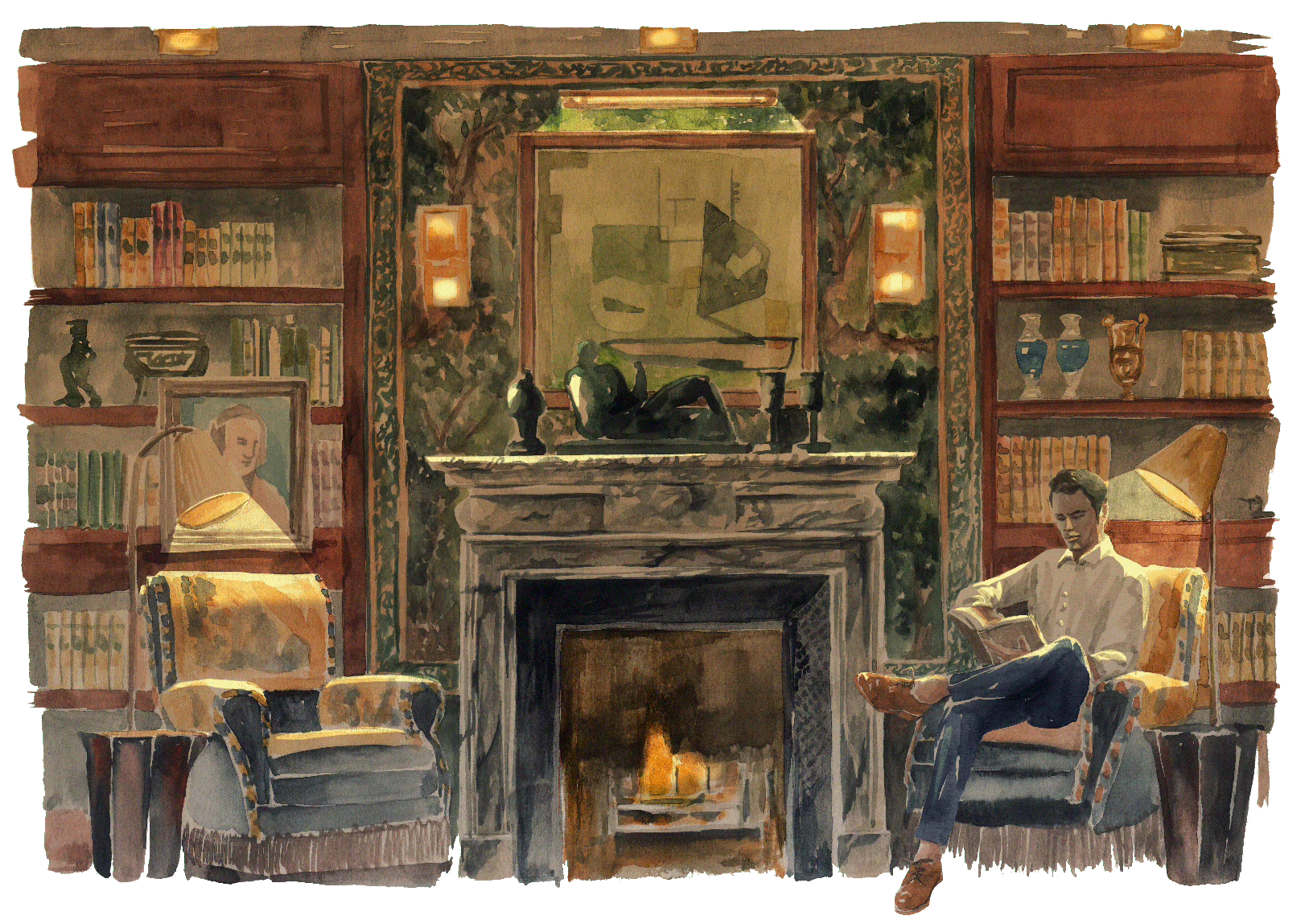
Maison Estelle, Mayfair
• Estelle Manor, Oxfordshire: Full private club on the estate with the Enshym Baths Roman spa, padel, falconry, events, and social programming. Sister club Maison Estelle operates in Mayfair. You can be a hotel guest without being a member, and the two cohorts exist side by side.
• The Ned NoMad, New York and The Ned London: Hotel guests can stay, but club spaces are members-only.
• The Lanesborough Club & Spa, London: Wellness-focused, starting from £6,000 annually. Hotel guests get complimentary gym access; full membership is a separate commitment.
• Gleneagles, Perthshire: Golf membership on the three championship courses, plus the separate Gleneagles Townhouse in Edinburgh.
• The Club by Bamford at Daylesford, Cotswolds: Child-free, wellness-forward, opened in 2023. Membership from £3,850 per year plus a £1,650 joining fee. Cryotherapy, padel, ice baths, personal training.
• Aman Club, New York: Upwards of $200,000 to join. This is less a subscription and more a real estate transaction masquerading as a membership.
• Rosewood’s Carlyle & Co., Hong Kong: Rosewood’s plunge into the social membership space.
With the proliferation of these membership club hotels, the question has become not why but when. How does the concept of community curation create relevance for a hotel in a city? Will they be able to capitalize on the culture of exclusivity? We will see.
For further reading on membership clubs, check out:
· The House Standard, “The Private Club Boom Has a Blindspot”
· Colin Nagy, “Cracking the Code for a New Wave of Members Clubs”
· Hotels Above Par, “The Hottest Membership Clubs”
· Hotels Above Par, “Have Hotels Cracked the Code on Private Members’ Clubs?”
🗝️ The Room Report — Personal reviews from my own travels
Estelle Manor, Oxfordshire
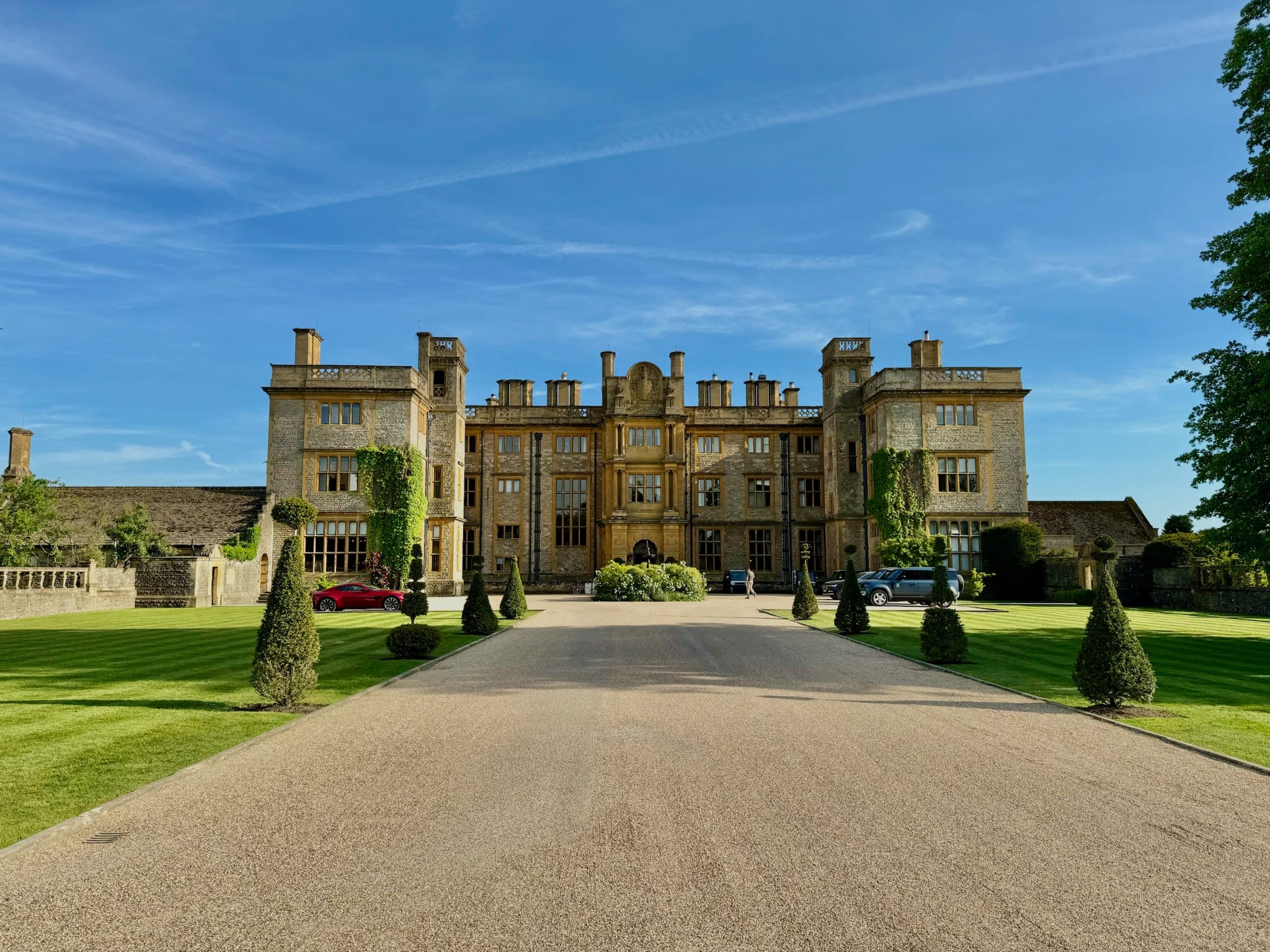
Estelle Manor, Anne Marie Brown
Last year, I stayed at Estelle Manor for two nights with my girlfriends. I loved it so much that I’m returning this summer with my family to stay in a woodland cottage. We will be doing a falconry walk, the baths experience at their Roman spa, and my children will ride around in “Little Landies” (mini Land Rovers that are endlessly Instagrammable).
There’s a maximalism at Estelle Manor that I love, but it’s not for everyone. Helicopters landed on the lawn, and I have a sneaking suspicion that several of the willowy women floating around the lobby in floor-length gowns were influencers. Estelle Manor is home to both a membership club and a hotel. Consequently, its management team has been working to balance both client classes as they jockey for restaurant reservations and pool chair use.
Sharan Pasricha made his name with the Hoxton Hotels, sold Ennismore to Accor in 2021 in a deal that valued the company at over $1 billion, and then kept Estelle Manor for himself. He and his wife Eiesha, who serves as the artistic director of both Estelle and its London sister Maison Estelle in Mayfair, own these properties personally, entirely outside the Ennismore/Accor structure.
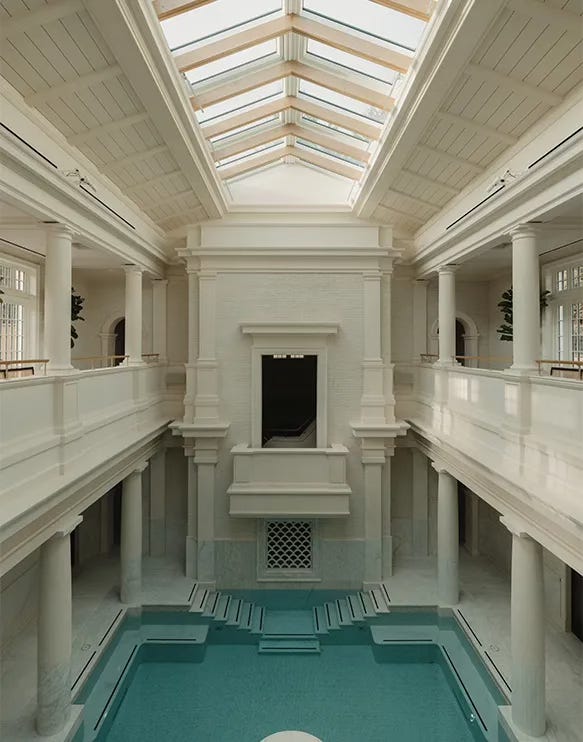
The property sits on 85 acres of Oxfordshire countryside, surrounded by over 3,000 acres of parkland, in a Grade II-listed Jacobean house that, in a previous life, has been a wartime maternity hospital, a gym, and a police training college. Opened in May 2023, it is now 108 rooms, four restaurants, a 3,000-square-meter Roman-inspired bathhouse, padel courts, a gym with 48 classes a week, a kids’ club called The Nook, and a members’ club that runs alongside the hotel operation.

Rooms
We stayed in the Walled Garden and Stable Rooms. They were sumptuously decorated, spacious, and came with all sorts of ayurvedic snacks and goodies. It was a bit challenging to navigate the pebbly gravel in heels on my way to dinner each night, but I made it. I did feel a bit bad for the bellhop who had to lug my giant suitcase up and down the narrow stairs to the second floor.
The estate houses woodland cottages for families near the spa, and larger cottages that start at £6,000 a night.
In the main house itself, there are suites with delicious soaking tubs, bathrooms you can get lost in, and plenty of guests enjoying people-watching from the windows overlooking the pool.


Spa
I can hardly wait to spend another full afternoon at the Enshym Baths. If you want to do the bath circuit, book early as those slots fill up. Make sure to build in time to enjoy tea and snacks at the café. I had one of the best massages of my life at that spa – so good I literally cried.
The Membership Model
This is a hotel and a members’ club sharing the same grounds, which means the energy shifts depending on the day. Weekday stays are quieter while Friday and Saturday evenings are more crowded. Club membership includes full estate access, priority booking, exclusive programming, and community events.
Sustainability
All electricity at Estelle Manor now comes from 100% renewable sources. The property has attained Green Key certification, a leading global standard for sustainable operations, and undergoes rigorous independent audits to maintain its status.
In the walled garden, a “no dig” approach sees herbs, fruits, and vegetables harvested for use at The Glasshouse restaurant. The gardening team repurposes flowers into dried arrangements displayed around the property for up to a year. Bottled water is served in glass bottles (plastic is beneath contempt here) supplied by Blenheim Water, a ten-minute drive away. Other comestibles are locally sourced as well, like the Mayfield Eggs from a nearby family-run farm.


🗝️ The Lobby Bar — Hospitality updates, promotions, and the occasional pun
Michelin Pulls the Green Star
The Michelin Guide Great Britain & Ireland has announced it’s retiring the green star, which recognized restaurants for sustainable practices. The designation launched in 2020, and the 37 green-starred restaurants across the UK and Ireland will lose it by the end of this year. In its place, Michelin is launching an editorial initiative called Mindful Voices. Unlike the green star, Mindful Voices is not a formal accolade and will have no accompanying icon or logo. Make of that what you will. A certification that restaurants spent years striving to earn is gone, replaced with something that amounts to a story series. The chefs found out via a mass email addressed “Dear Chef.” Not very classy, Michelin. The Caterer
Raffles Is Going to Courchevel
Raffles Hotels & Resorts is opening its first-ever alpine resort in Courchevel 1850, set within the Jardin Alpin precinct with views across the Tarentaise Valley. The property is slated for the 2028 winter season, featuring 50 rooms and suites with interiors by Humbert & Poyet. Rosewood beat them there, opening its own Jardin Alpin property in December 2025. One&Only has also announced plans in the same enclave, with a target of 2030. Courchevel is turning into a luxury hotel arms race. If ski-in/ski-out France is on your list, the window to book before rates reflect all this new inventory is closing fast. Tao Hua Yuan Business Traveler
Four Seasons Gstaad Is Coming Back
The Park Gstaad, currently being reimagined by interior designer Joseph Dirand, is scheduled to reopen as The Park Gstaad, Four Seasons Hotel in time for the 2026-27 winter season. This one’s been watched closely in Swiss circles for a while. Six private residences are now also for sale alongside the hotel. If wintertime Switzerland is on your radar, this is worth putting on the list early. parkgstaad
Condé Nast Wants to Be Your Shopping Platform
Condé Nast launched Vette, a creator-focused commerce platform that lets influencers and editors build curated storefronts. Brands drop-ship orders, Vette handles checkout, and creators focus on curation. It’s their answer to LTK and ShopMy, using editorial credibility as the differentiator. Why should this matter to travelers? Travel content is heading in the same direction. Newsletters, Substacks, and creator-led recommendations are replacing the glossy magazine spread. When Condé Nast builds infrastructure for it, that tells you where the money will follow. Influencer Marketing Hub
Your Hotel’s Check-In Is Now Partly Run by AI (But the Desk Isn’t Going Away)
New research from Mews found that 98% of hoteliers have used AI across their operations in the last six months, with AI involved in 11 of the 19 most common hotel tasks. Despite that, 59% of hoteliers say the front desk welcome and check-in should remain in human hands, and that view is strongest among properties already using AI most extensively. Your room assignment, rate, and housekeeping schedule are almost certainly touched by an algorithm now. The being who greets you at check-in is probably still human. For now, at least. eHotelier Insights
TikTok Is Now a Booking Engine
A platform called Cray has been building “the OTA for Gen Z”: a tool that connects influencers and tour operators, letting travelers on TikTok or Instagram impulse-book experiences directly through short-form video. Commission that would normally go to Viator or GetYourGuide goes to Cray instead, which splits it with the creator who generated the booking. It’s affiliate marketing with a booking layer built in, aimed at the generation that uses TikTok the way everyone else uses Google. Arival
TikTok Go now links videos directly to Booking.com, Expedia, and Viator, letting users check availability and book without leaving the app. Bookable clips appear in the For You feed, search results, and location pages, collapsing the reservation process into a single closed interaction. Tubefilter, Travel Weekly
Ascott Is Building for a World Where AI Books Your Hotel
Ascott Limited announced a major investment in AI-ready infrastructure through partnerships with Accenture, Amadeus, and EHL Hospitality Business School, aimed at preparing for a future where intelligent agents increasingly shape how travelers discover, plan, and book stays. The initiative spans digital architecture, distribution systems, and workforce training. The panel they hosted at their global conference put the question plainly: “When AI agents become the first audience, how will Ascott convince software before humans?” Hotel Management
🗝️ Anne Marie, Founder of Alpenglow Travel, Managing Director of Colorado Ohana Ventures, Traveler, Mother, Writer of the Upgrade, Solver of Travel Problems
Sources
1 Luxury London, “The New London Members’ Clubs,” November 2025. Note: the 130+ figure is widely cited in industry coverage; the piece originally attributed it to The Hollywood Reporter, but the Hollywood Reporter article referenced (Carson Griffith, May 13, 2026) covers New York clubs. Attribution corrected here.
2 Growth Market Reports, “Private Members’ Club Market Research Report 2033,” via Hospitality Net / RLA Global, October 2025. Note: market sizing figures vary by research firm ($31.7B–$34.2B for 2024; projections range $59B–$64B by 2033 depending on source). The piece’s caveat about undercounting is well-founded.
3 Business Research Company / Luxury Hotel School Paris, “Global Luxury Hospitality Market,” 2024–2025. Verified across multiple industry sources including digitalguest.com and worldbigroup.com.
4 GGA Partners / CMAA Research, “A Club Leader’s Perspective: Emerging Trends and Opportunities for 2023,” February 2023. Note: survey covered primarily country clubs and city/athletic clubs, not social members’ clubs of the Soho House type. Direction of travel applies broadly; absolute percentages should be read in that context.
5 Soho House & Co, Q2 2024 Earnings Report (waitlist at 111,000, August 2024). Text updated from 100,000 to 110,000+ to reflect the most recent reported figure. Annabel’s waitlist sourced to Spear’s, “How to Join Annabel’s,” November 2023; “six-year wait” language softened to “measured in years” as no primary source is attached to that specific figure.
6 Soho House & Co (NYSE: SHCO), Q2 2021 Earnings Report (30 Houses, 111,910 members) and Q2 2023 Earnings Report (41 Houses, 176,305 members); FY2024 Earnings Release, March 31, 2025 (212,447 members). Member count in text updated from 193,900 (a 2023 year-end figure) to 212,000+ to reflect the correct FY2024 number.
7 Soho House & Co, FY2024 Earnings Release, March 31, 2025 (via Nasdaq / BusinessWire). Financials corrected from Q4-only figures to full fiscal year 2024: total revenue $1.2B, net loss $163M, adjusted EBITDA $131.9M. The original text cited $91.7M net loss and $32.3M EBITDA, which were Q4 2024 figures only.
Good piece. I think there is also the whole segment of members only spaces for owners of branded residences. Guests may not even know they exist but they add substantially to a property and the offerings. For someone who stays at Four Seasons Costa Palmas, it’s a nice hotel with quite a few restaurants and pools but if you are an owner, you get access to a special beach club, additional pools. A Four Seasons guest would not know as it’s part of the larger infrastructure and thus wouldn’t feel like they are missing out but it definitely adds a layer of choice and also a place people know they are among other owners.
I’ve seen more hotel fitness club hybrids pop up too - like Equinox; which is membership in another form as well. Guests have access to all the gym has the offer. I see the appeal of the memberships from a hotelier perspective - but as a consumer; I’d need to really buy into the community piece.