

🗝️ The Upgrade | Weekly by Anne Marie Brown.
Issue 12 · Finding Hidden Gem Hotels that aren’t on the Global Distribution System
In The Upgrade this week:
Pre-Departure – Finding Hidden Gem Hotels that aren’t on the Global Distribution System
The Room Report – Le Negresco, Nice, France
The Lobby Bar – Global tourism has officially recovered to pre-Covid levels, FAA brings AI into the control tower
Travelers,
I’m writing The Upgrade | Weekly in Nice, France, this week. A heat dome has driven temperatures up into the mid 90s here and they cancelled the Ironman. We’ve spent two nights bouncing from poolside to beach clubs, just trying to stay cool. We drove here from the Dolomites, where we passed five nights at Sonnwies, a family hotel, which looked straight out of The Sound of Music. Sonnwies will be the subject of next week’s The Upgrade Weekly and Master Key. It’s an incredible property, and a great example of the independent hotels that aren’t on GDS and don’t usually work with travel advisors, which are the subject of this week’s article. We are signing a partnership with them and will become one of the first few agencies they work with as they expand their US market presence. I’m thrilled about the partnership after our stay and can’t wait to send them my clients.
Marissa Klurstein, @mklurstein on both TikTok and Instagram, is my guest on this week’s The Upgrade. She writes Happy Hoteling on Substack and is an expert on hidden gem hotels. I wanted to go straight to the source and share her knowledge with my readers since not every hotel is a Four Seasons, and many are worth a stay. The fact that advisors don’t receive a commission shouldn’t keep us from booking them (a subject I discuss with Marissa below) at rare finds like these if that’s the kind of experience a client is seeking.
Happy travels! Anne Marie
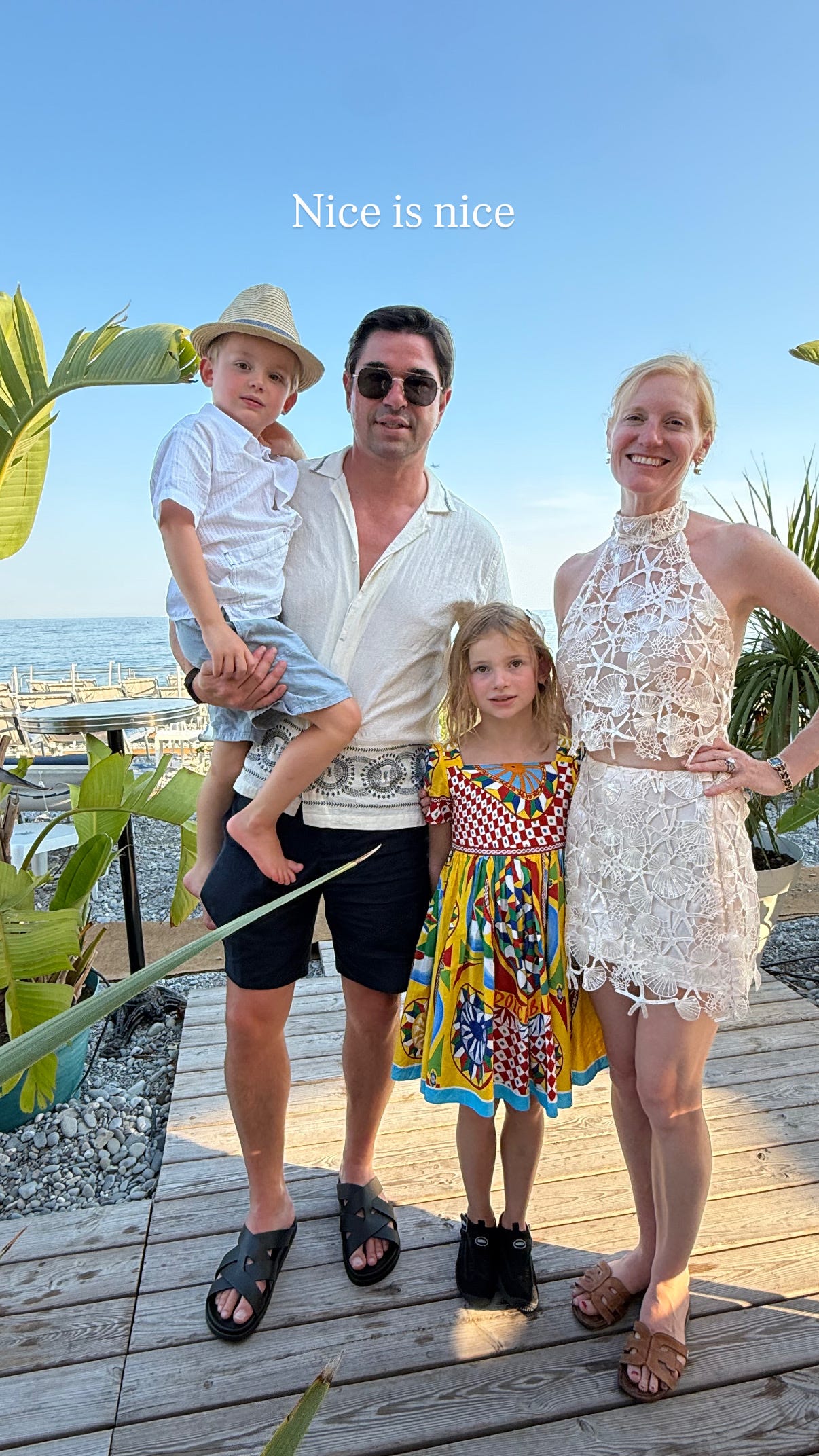
Yours truly in Nice with my Bougie Bunnies, trying not to die of heat stroke. Follow along on our Euro Summer on Instagram, @AnneMarieBrown7
🗝️ Pre-Departure — Hospitality Hot Takes
Hidden Gem Hotels With Marissa Klurstein of Happy Hoteling –
When Independent Properties Aren’t On GDS
For The Upgrade readers who are not in the travel industry, GDS stands for Global Distribution System. It’s the digital marketplace that connects travel sellers – like agents and booking sites – with airlines, hotels, and rental car companies, letting them check real-time availability and pricing and book it all in one place. Sabre, one of the largest GDS platforms, was born in the late 1950s as a joint project between American Airlines and IBM to automate the airline’s reservation system. It then grew into the independent global booking network that powers much of the travel industry today.
By using GDS, travel advisors can pull rates and attach our IATA numbers to bookings, which tells hotels how to pay our commission. Many travel agencies have developed booking portals that also pull from Sabre.
While long-time agents with extensive personal travel experience – like my Alpenglow Team – typically recommend hotels based on our own travels, a large portion of the travel agent industry uses GDS or consortiums such as Virtuoso to research which hotels to recommend.
For hotels, the upside of GDS is wide distribution through the agency network. For travelers, the downside is that not every hotel, particularly smaller, independent hotels in Europe, is on Sabre.
Marissa Klurstein of Happy Hoteling here on Substack is one of the experts at finding these smaller properties that are worth a stay.
I interviewed her for The Upgrade to tap into this enormous fount of knowledge.
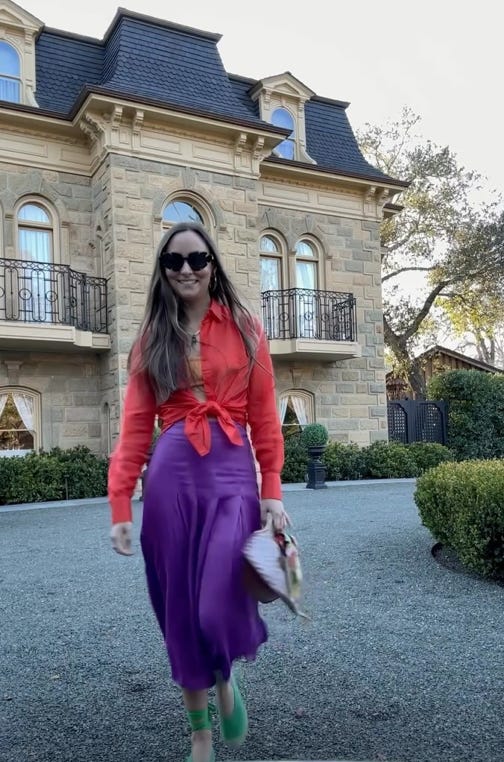
A: Can you tell me a bit more about your background and how you got into the hospitality business?
M: It was not a linear path!
I’m a very fortunate only child with an older dad who took me to Capri every summer as I was growing up. Staying in the same room at the same hotel every year, I was obsessed with being a version of Eloise. I never liked to play “house” growing up, but I spent lots of time playing “hotel,” dreaming up the most out-there and unique places that I wished existed. I traveled extensively throughout my childhood and it was the hotels that most stuck in my mind. However, I tucked away my little kid dream of somehow working in the world of travel and instead, after college, began my career as a creative strategist and copywriter at a New York agency that worked with fashion, luxury, beauty, and lifestyle brands. I was always the idea girl of the office who had a way with words and a strong intuition about how people dream instead of how the data suggested they should dream.
In my 20s, I traveled a lot with one of my best friends from high school, and she would give me full rein to plan the trip. We would end up at these little gem hotels that still fit our age bracket’s budget, and her mom would always say that I should really do something with this knack I had. I never knew how that might come to be until I took a big splurge of a 30th birthday trip and stayed at the Ritz in Paris. The Delta strain of COVID had just hit, so rates were at an all-time low and AmEx had a special. So I stayed at a place I had long dreamed of and then started dreaming about how to make this a part of my real life. I wanted Hotel Marissa and Real Life Marissa to interact year-round.
I had the nugget of an idea to start posting about hotels on TikTok, and one day I decided to just go for it and committed to posting every day for a month to see where it would go. It turned out to go very far very fast. People on the internet trusted my taste just as my office colleagues did. I decided to turn my video sign-off, Happy Hoteling, into my brand name, which was available as a .com URL. As someone who has named many a brand in my career, I knew that green light was golden.
I started by making a comprehensive guide to the place I was so fortunate to know both as a tourist and a local, Capri. Then I broadened it to Rome hotels, Tuscan countryside hotels, and then all of Italy. I was still working as a freelance strategist and copywriter, but my heart was increasingly moving to travel. I decided to try working as a travel advisor to earn a living despite my gut telling me that my strength was not in anything that required attentive email checking.
I was incredibly fortunate to never have to search for clients, as they immediately appeared through TikTok, but I was eager to find another outlet to share my perspective and knowledge. So, on another late-night whim, I started a Substack and immediately shared it with my online community, which gave me the responsibility to actually stick with it. That was three years ago, which is nuts! When I hit the top 10 of the travel leaderboard I decided to give it a full-time go, and step away from what I didn’t love which was the travel advisor route. And now we are here!
A: Tell me about your publication on Substack.
M: Happy Hoteling is a home for “Good People with Good Taste.” It is a repository for the most extraordinary hotels around the world, with full, deeply-researched hotel lists for many of the most-traveled countries in the world – Italy, France, the US, Mexico, Canada, the Caribbean, the UK, Ireland, Spain, Portugal, Switzerland, Austria, Scandinavia, the Netherlands, Greece, Croatia, Japan, Sri Lanka, China, Morocco, South Africa, Central America…you get the gist. And then, for Founding Members, I offer a Google Map to every single Happy Hoteling-approved hotel across the globe, called “Happy Hoteling Around the World.” I’ve tried to build a single destination where any Hotel Person from anywhere can find a hotel that is much more than a place to lay your head, not a soulless structure, anywhere in the world. My archive is a kind of evergreen resource.
My deepest specialty is Italy – hotels and itineraries specifically. This is one big arm of Happy Hoteling, especially now that I live in Florence. I know this country extensively and deeply, both on and off the typical tourist track, and I take great pleasure in sharing it with the world. The goal is to help readers discover places they didn’t know existed, including hotels that are woven into the cultural fabric of their location, and return home with great memories and a deeper understanding of our world.
Happy Hoteling is also a place for my ideas and opinions – I have lots of both – and somehow I got lucky enough to discover that people are interested in them.
A: You were a travel advisor briefly. Tell me what you learned during that stint and what you wish other advisors knew?
M: Oh gosh, there’s a lot, but most importantly I wish advisors were more conscious of their role in over-tourism and the erosion of local culture and quality of life by sending clients to the same places over and over again. Advisors have a huge influence on where their clients travel, and there’s immense opportunity in and appetite for guidance on hotels and destinations that are not packed with other Americans.
The other thing, which is controversial but I don’t think should be, is that advisors have a great opportunity to encourage clients to travel in a way that allows for spontaneity, getting out of their comfort zone, and learning something about local culture even if they think they don’t want to. Advisors can curate wonderful cultural immersions that don’t feel like a chore or a box to tick. Too often, however, they focus primarily on creating a seamless experience.
A: The GDS, for example Sabre, is how most travel advisors find and book hotels. It allows us to receive commission from properties after a client’s stay, track their stay, and see hotel inventory. I have found only two hotels that are not on our GDS, and both are in the Dolomites and don’t pay commission. It’s a tough sell for a travel advisor to work with properties like these, because it means working for free to book them for clients.
How do you recommend advisors work with hotels like these?
M: I’m big on the concept of a planning fee to compensate for non-commissionable properties. Travel advisors work hard and spent so much time on planning every trip. That time should be properly compensated, but I don’t feel it has to come from the hotels themselves, or at least not from every hotel on a multi-stop itinerary. Creating access to these smaller hotels that are not on the GDS is where I hope Happy Hoteling creates value because it takes a great deal of time to find these places.
Consortia like Relais & Chateaux aim to bring small, independently owned hotels to the marketplace through various channels, like advisors. What do you think of them? Are there any smaller consortia you know of that do a good job of creating awareness of these properties?
Relais & Chateau is the absolute best for this, without a doubt. To me, it’s the most trusted name for hotels that are soulful, character-filled, and part of the culture they inhabit. I particularly respect them as they have still not partnered with a mass distributor like a Marriott or IHG, which is where I think these consortia start to lose their appeal and level of taste.
Leading Hotels of the World and Small Luxury Hotels are two others I respect, and I think they have bridged a huge gap in the independent hotel space, but they are often properties that can also be found through Virtuoso or AmEx Fine Hotels and Resorts, so they tend to become more American-heavy than R&C for example.
Tablet is not the same, as it is an OTA (online travel agency), but it probably has what I would consider the biggest inventory of independent hotels worldwide that it makes commissionable.
Smaller consortia like Pretty Hotels and Room + Wild are great for discovery, but at the end of the day they have their own advisors. This is to say there is immense white space – it would be my ultimate dream for Happy Hoteling to become something of the sort.
A: How do you go about finding these “hidden gem” properties, and how do you propose solving the marketing challenge if they aren’t willing to pay commission to advisors?
M: Oh man, so many ways! First, I have been “collecting” hotels since I was a kid, and I have a strangely good memory so I remember where that well-dressed family from Germany we met when I was twelve vacations, and I have pored over legacy travel publications throughout my life. When I worked with some of the world’s biggest and greatest luxury brands, I always paid attention to where the clients with the best taste traveled, and I’d hunt down where they stayed as if there were a prize for finding it.
The biggest paths of discovery for me are the most labor-intensive, and honestly they require zooming all the way in to a particularly wonderful part of the globe on a Google Map and then looking at every single hotel in the area, searching for gems. Because I love historic hotels, I often go through the deep inventory of listed buildings in any country or destination of interest and look for the ones that are hotels and which of those seem worth staying at. It involves some stalker-like behavior too, like looking through the thousands of accounts that some of my favorite legacy fashion editors, photographers, tastemakers and creatives follow on Instagram. Hotel owners and concierges with great personal style and taste, too.
If a hotel is largely “undiscoverable” in the traditional sense, I find that’s often a good thing, and I don’t necessarily want them to start marketing themselves in a more mainstream way, which is why I don’t tell hotels when I feature them on Happy Hoteling, and I almost always show up completely unannounced when I stay at one myself.
For a travel advisor, I see it much like the reason I have a paywall. Readers who want to discover these hotels should realize that when an advisor goes deep into research to find these gems it’s reasonable to charge a planning fee for all that work. If people want to stay at a hidden gem, they should pay for the effort to discover it.
A: What are some of your favorite off-the-beaten path properties that you’d like people to know about?
It’s so hard to choose! Nearly everywhere I stay sits in this category. La Minerva in Capri is top of mind, even though it’s certainly on the beaten path – it’s a family-run business that makes every single guest feel like the most important one, and staying there is purchasing a path to the heart of the island that many never find. I have sent some of my most picky and successful friends there and they love it as much as they do the Belmonds of the world. In the same vein, La Minervetta in Sorrento, Palazzo Niccolini al Duomo in Florence, and Castello di Potentino in the Tuscan countryside – all destinations on the beaten path but they all have an off-the-beaten path feel.
When a hotel is in a location that’s off the beaten path, I usually don’t really want that many more people to know about it because I’m so conscious of protecting locals’ quality of life. There has to be some barrier to entry, to ensure it won’t become a hotspot where rates triple and the local culture changes. Verana, in Yelapa, Mexico, which can only reached by speedboat and a hefty hike up through the jungle, is a truly special place. In Northern California, where I’m from, the Inn at Newport Ranch on the Mendocino Coast is another – and luxury is served with true authenticity. Grandhotel Giessbach on Lake Brienz in Switzerland, where I went with my dad as a kid and then returned a year and a half ago is a near-perfect hotel in my mind. It’s totally from the past but so comfortable for today. In Italy hundreds come to mind as so much of the country is wonderfully off-the-beaten-path for the American audience at least. A couple to share are the Wes Anderson Grand Hotel Bagni Nuovi in Bormio in the Dolomites – for the most insanely wonderful spa experience and grand dining room – and Terre di Sacra in Maremma on the Tuscan Coast.
A: What do you look for in a hotel that makes it worth recommending?
M: A point of view, a sense of place, and an opportunity to leave with an understanding of the place the hotel is in! More specifically, family-owned properties, historic places handed down for centuries, and a hotel that cannot be compared to any other because it is simply one of a kind. A big name means nothing to me if offers a cookie-cutter experience, or all rooms look the same, etc.
A: What are some expectations that American travelers have that they should leave at the door when staying in smaller properties in Europe?
M: It depends where, but all the amenities that come with a well-known property. They might not have room service or even a TV in the room (a huge plus for me), but they have so much to offer in ways that matter for the memories that stick with you for a lifetime. Another thing to leave at home is the expectation that everyone will always speak English, and that it is a requirement for being able to stay somewhere. As English-speakers we are so blessed that our language is an international one, but for most every other country around the world this is not the case. With a translation app and the understanding that a smile is universal you can stay anywhere, language barrier be damned.
In general, I would encourage people to stay in places that don’t tick every single box on their wish list. When I was a travel agent, the least rewarding itineraries were for the clients who had the longest criteria checklists.
A: “Slow travel” is trending online, but the reality is that most US travelers have limited vacation time and are constrained by school schedules. If a couple with kids were to come to Italy, what route would you recommend for them? What do you think of the slow travel trend and the reality?
M: In theory, slow travel is the dream, but as you said, for most Americans it’s not realistic, and there shouldn’t be any shame in that. I’m wary of sharing any one route as THE route because it’s the antithesis of how I view travel. I’d encourage families to think of Thanksgiving, December, Presidents Day and spring break as great times to visit Italy simply because they’re not summer. Cities are especially hard for kids to enjoy when it’s so hot and seeing the sights comes with long lines that are no fun for anyone. I’d also encourage parents to take their kids where the adults want to go, not to a specifically family-friendly destination or hotel, as long is there no age requirement. I don’t subscribe to the idea that there has to be a lot of kid-specific infrastructure in place for kids to have fun. Fun can be had anywhere, and grown-ups who are interested in the world are the most likely to create fun for kids by exposing them to new things without expecting 100% comfort 100% of the time.
I encourage people to go where their own families’ interests lie. Do your kids really like tennis, for example? Make an itinerary out of hotels with great courts. Or maybe you’re a hiking family – take to the many places you can hike, from the coast of Liguria to the coast of Tuscany, to Valle d’Aosta, or the Aeolian Islands of Sicily. Hiking doesn’t need to equate to the Dolomites alone, just as a beach vacation doesn’t need to be restricted to the Amalfi Coast.
If you are traveling in the summer, it’s lovely to remember that Italians really take advantage of their country on their time off, so kids can be found nearly everywhere and they don’t need to speak the same language to hunt for seashells on the beach together.
One way I like to lean into slow travel is a longer game – returning to the same destination multiple times to really get to know the place and its people, even if you can only stay for a few days at a time. Tradition is so powerful in travel!
One of the best parts of Substack is getting to meet thought leaders in the travel and hospitality space that I might never otherwise have crossed paths with. I’m so very grateful for Marissa taking her time for this interview! Check out her Substack, Marissa Klurstein, and if any of the hotels interest you, feel free to reach out to me at AnneMarie@AlpenglowTravel.com to book.
🗝️ Room Report — Le Negresco, Nice, France


During my stay in Nice, I had the chance to tour the iconic Le Negresco Hotel. You may recognize the hotel’s iconic pink dome from many postcards and renderings of Nice’s sweeping, angel-wing coastline. Henri Negresco, the son of a Romanian innkeeper who worked his way up from confectioner to casino director, opened the hotel in 1912 and wanted it to pull in the richest travelers on the Riviera. World War I decimated his business, and the building became a military hospital. Negresco died nearly broke in 1920.
The hotel’s second life started in 1957, when a local businessman named Mesnage bought the run-down property and handed it to his daughter, Jeanne Augier. She ran it for the next sixty-two years, until her death in 2019, and she treated the place as one long collecting project. She bought furniture, paintings, and objects across France until the collection passed 6,000 pieces, spanning the 17th to the 20th centuries. When you stay here, you are sleeping inside a private museum.
The Salon Royal, under the dome designed by Edouard Niermans’ who also designed the Moulin Rouge in Paris, holds a Baccarat chandelier of 16,800 crystals. Tsar Nicholas II commissioned a matching pair for the Kremlin, the Russian Revolution cut the order short, and the Negresco ended up with the one that never shipped east. A few steps away sits Niki de Saint Phalle’s bright yellow Nana, so 17th-century portraits and pop art share the same room.
The hotel runs 102 rooms and 28 suites across five categories.
Exclusive and Deluxe rooms give you the traditional French look: rich fabrics, antique pieces, warm colors, with views over either the sea or the city. The suites are where Augier’s taste really shows as each one is built around a person or a period. La Marie-Antoinette leans on period furniture and silk, La Pompadour does 18th-century wood paneling and Regency pieces, there’s a Chanel-themed room, and the The Empire suite, one of Augier’s own favorites, comes with eagles, griffins, and a swan-neck bed that nods to Empress Josephine.
Augier had no children, so she set the hotel up to outlive her on her own terms. Rumor has it that Bill Gates once offered a blank check and told her she could name her price to sell him the hotel, but she refused. Instead, in 2009 she created FDMAN, the Fonds de Dotation Mesnage-Augier-Negresco, and willed the hotel to it. That fund owns Le Negresco today and directs the proceeds toward four causes Augier cared about: helping people in need, improving life for people with physical disabilities, fighting animal cruelty, and preserving French culture. The money from your stay feeds those causes.
🗝️ The Lobby Bar — Hospitality updates, promotions, and the occasional pun
Global tourism returns to pre-COVID levels
Global tourism recovered to pre-Covid levels in 2024, according to UN Tourism, reports Associate Editor Rashaad Jorden.
About 1.4 billion people traveled internationally last year, up 11% from the year before. That increase was driven in part by substantial growth in visitors to Africa and the Asia-Pacific region. Tourism to Asia-Pacific was boosted by China easing visa requirements, with the country seeing a significant jump in tourist arrivals during the first three quarters of last year. UN Tourism projects that 2025 international tourist arrivals will grow 3% to 5%.
Hotel demand is climbing, and not only at the top
US hotel demand is rebounding across every tier, Skift reports. RevPAR rose 6.7% year over year on a trailing 10-week average through June 13, then accelerated to 9.7% for the week ending June 20. Luxury led the field, up 17.4%, with upscale higher by 9% and mid-market up 3%. The gains cluster Monday through Thursday, which points to business travelers coming back rather than weekend leisure deals. If you’re watching rate trends before locking in fall bookings, keep this in mind.
Travel keeps growing, but the pace has cooled
International travel is still expanding, though more slowly than forecast. UN Tourism reports 307 million international trips in the first quarter of 2026, about 6 million more than the same period last year, a 2% increase. That sits below the 3% to 4% the agency had projected, with the slowdown tied in part to disruption in the Middle East in March. For all of 2025, arrivals finished up 4%, reaching an estimated 1.52 billion.
FAA brings AI into the control tower
The Federal Aviation Administration is moving AI from talking point to working tool, TravelPulse reports. The agency is testing technology built to reduce runway incidents and flag conflicts before a plane leaves the gate. Three firms, Palantir, Thales, and Air Space Intelligence, competed on the SMART program, with Air Space Intelligence winning the contract to deploy the system. It could be operational in some form later this year. Former NTSB chair Robert Sumwalt told Politico the technology can sharpen the FAA’s awareness of safety risks, while warning against over-reliance: human judgment remains essential for now. For your clients who watch the headlines on air travel safety, this could be worth pointing out.
Most people who build something that valuable cash out. She turned it into an inheritance for people the world usually ignores instead of a payout for herself.
Love so many things here. Completely agree that family friendly doesn’t have to mean waterslides and infrastructure. Some of our best family travel memories just involve exploring what a hotel and destination has to offer - gardens in the English countryside with a toddler exploring alongside British retirees, a walk along the beach in grand cayman, etc.
I also like the idea that travel doesn’t always have to be comfortable. You don’t need every checklist item filled - getting out of your zone expands your horizons and leaves you with more stories to tell