

🗝️ The Upgrade | Weekly by Anne Marie Brown
21. The Upgrade | Weekly – A Fora Follow Up
Travelers,
This morning finally felt like autumn in Denver, with a crisp quality to the air and last night’s rain lingering on our patio furniture. This is my favorite time of year, when the Aspens in the mountains are about to turn all shades of gold for a brief two weeks. With summer behind us, my bookings slow to a more normal pace, as clients start thinking about spring break and next year’s summer plans rather than two months from now. Kids are back in school, I’m home for a few weeks (until I head to Umbria to run a poetry retreat and Aspen to cohost a mahjong retreat).
I want to take a quick moment to celebrate 1,000 of you subscribing to The Upgrade.
I started this little newsletter 21 weeks ago as a way to honor my dad, who wrote a weekly newsletter about the hospitality industry for 40 years. He passed away four years ago, and while I haven’t been able to locate the full archives of his articles, I’ve found a few and have been sharing them occasionally under Hotel History for paid subscribers. I never imagined that my Substack would grow to this point, and I’m constantly amazed by the fact that you all want to read my hospitality hot takes every week. This is to say thank you, from the bottom of my heart, for reading my work.
This week’s newsletter is a follow up to my July 21 article about Fora. It was my most widely read and commented on piece, which took me by surprise. One of the Fora executives reached out to me and agreed to spend some time with me at Virtuoso Travel Week to address my concerns I voiced as a legacy travel advisor in the industry.

In the Lobby Bar, we have rumors that Rosewood may be selling its London flagship, Paris trimmed its Palace list (see who got cut!), Hilton is bringing LXR to Costa Rica, Four Seasons named a new Serengeti GM, Italy's luxury pipeline is stacking up for 2027, Bulgari's second UAE property has a shape, and hotel tech darling Mews just picked up a banking license, does that mean an IPO is around the corner?
Happy travels!
Anne Marie
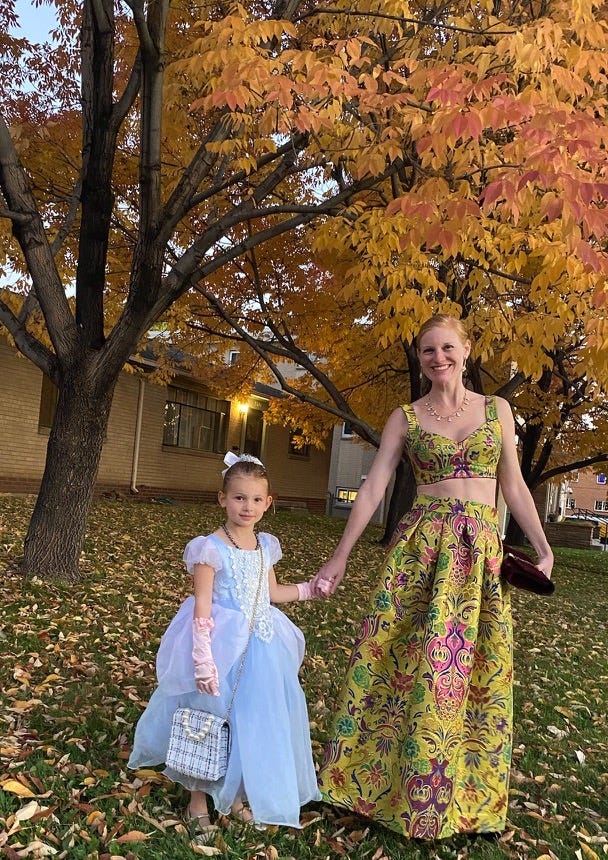
Yours truly, with my daughter, loving autumn
In case you missed it… past articles from The Upgrade
If you’d like to work with me to plan your trip, reach out to AnneMarie@AlpenglowTravel.com
Use our booking tool to access our hotel partnerships at www.Alpenglowtravel.com
🗝️ Pre-Departure — Hospitality Hot Takes
Fora Responds to my Article
A few weeks ago, I wrote an article for The Upgrade | Weekly about my take on Fora following their unicorn status and $1B valuation.1
My article got some traction and was shared by several people in the industry. It eventually made its way to Paul Tumpowsky, CRO of Fora. Paul reached out to me and offered to provide his perspective on the company, responding to some of the concerns I raised in the article. We sat down at Sadelle’s during Virtuoso Travel Week, (which sparked a flurry of text messages the next morning asking if Alex Barnes, who joined me for the discussion, and I were moving from Coastline to Fora. Answer – we don’t have any plans to move our host affiliation, settle down ya’ll).
A quick recap –
Firstly, who am I and why am I weighing in on this topic? As a member of the professional luxury travel community for 18 years, growing up in a family that owned hotels for 3 generations, sitting on the advisory board of a venture capital firm, and having created a travel tech platform called Itinerate (a two-sided marketplace connecting DMCs and advisors that we launched in 2020 and pulled the platform shortly after due to the pandemic’s impact on travel), I live and breathe the travel and hospitality industry.
The tech stack in professional travel planning is highly fragmented, and no one company has been able to successfully solve for all aspects of what we need as advisors.
The result has been a handful of different platforms that solve one or two aspects of our job well, and fail at others. Fora seems to be the one technology platform that solves multiple problems smoothly. Leading to the question, are they a tech company or a host agency?
My pitch deck for Itinerate in 2018 included a lot of the bets that Fora has proven right – that travel advisors would make a comeback as people sought flexible careers and influencers looked to monetize their follower bases. Needless to say, Fora has captured my interest since launch, both due to their technology and astronomical growth. However, like all new entrants and disrupters in an established industry, Fora has caused some waves.
I’ve sat through enough travel industry leadership meetings over the years where senior executives bemoan that the travel advisor role was previously on the path to extinction. They worried that young people were not attracted to the job, and senior advisors were retiring with no one to take over their books of business.
Flash forward to 2026, where being a travel advisor is number 18 on LinkedIn’s Jobs on the Rise for 2026,2 largely because of Fora. The company has removed a lot of the traditional barriers to entry for new advisors, and made it possible for just about anyone to access an IATA number in order to receive commission from hotels, (with some vetting, of course).3 This has led to an influx of new travel advisors learning the ropes and booking travel.
As with any company that grows quickly, there have been some questions about what that growth and scale mean for the rest of the industry.
I raised a few areas of concern in my article:
Training and mentorship gaps: I noted that the path to professional advising is slow by design, essentially an apprenticeship. Fora gives people access to information and an IATA number immediately. Their training also seemed to me to be largely self-driven with access to videos etc, but I wondered if they had any kind of mentorship program to hold the hands of new advisors. I also wanted to know about the gates in place to help ease this transition for new advisors. I expressed my concern with the fact that the majority of their advisors are new to travel sales,4 and was curious how they ensured consumer protection and service quality.
Strain on the supplier side: With their rapid growth bringing scores of new advisors to the industry, I expressed concern that the volume of inexperienced advisors might create more errors, more escalations, and more work for hotel sales teams.
Self-booking and hobbyists: I also expressed concern that I, and other advisors, have seen a handful of my clients become Fora agents themselves, not as a professional career path, but so they could self-book their own trips and essentially receive a commission back for their own travel. I don’t want to see widespread cannibalization of our client base, so I wanted to understand what protections they have in place to prevent people from just becoming a “user” vs an “advisor.” Should a user have the same access as an advisor?
AI vulnerability. Putting on my VC investor hat, I noted that their business looks more exposed to replacement by AI platforms than traditional host agencies, at least at the lower end. I was curious if they are going to try to go direct-to-consumer with their AI planning tool, or license their technology to other host agencies, because frankly, it’s the best in the industry and we could all benefit from it.
Interview with Paul Tumpowsky, CRO of Fora
Paul was kind enough to address these questions, and provide his perspective on how Fora is tackling such concerns.
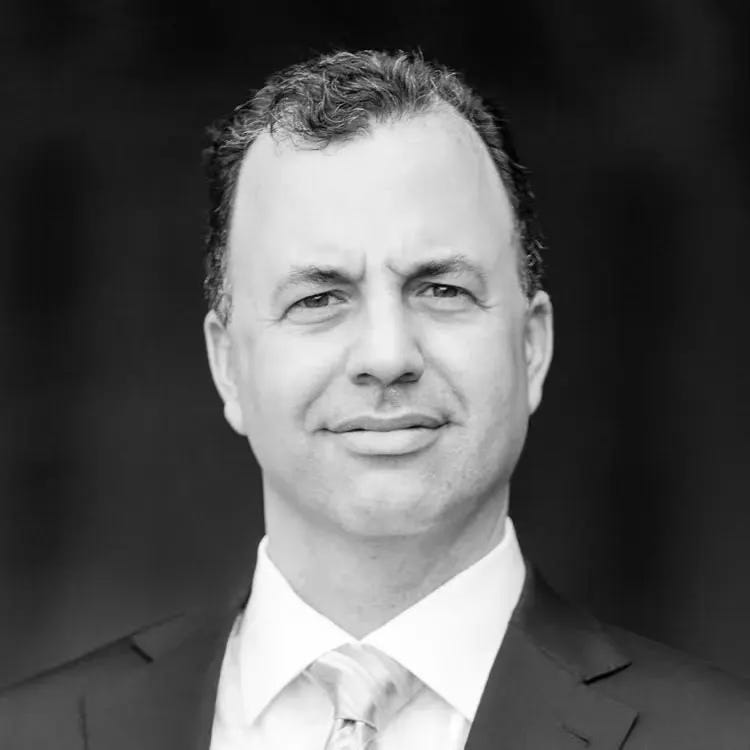
Anne Marie: Can you please share your background and what led you to Fora?
Paul: In 2014 I founded Skylark, which was the first luxury OTA with full-service support from advisors. Prior to COVID, I had known Evan Frank, one of Fora’s co-founders, and we had tried to work together in his previous roles. Henley, one of the other Fora co-founders, and I have sat on several industry advisory boards together. In 2024, after I had stepped down as CEO of Skylark, the Fora founders approached me about joining as Chief Revenue Officer, and I was happy to accept. At Skylark, we had a few independent contractor advisors who worked with us. However, I underestimated the importance of community in that offering. By the time I joined Fora, it was very clear that the advisor community would be one of the key pillars to the success of this business.
Anne Marie: Tell me more about the mentorship and training opportunities for new Fora advisors - you mentioned in our conversation that once a Fora advisor has established a strong booking record, they have access to these opportunities outside of the self-guided training available. What does that threshold look like?
Paul: Fora offers new advisors a mix of structured and on-demand training so they can ramp up on their own schedule. The training starts with the fundamentals, and then opens up to a whole world of destination, supplier, and niche-specific training. Fora currently offers 700+ hours of on-demand training content and 28+ hours of live training per week.
As advisors progress in their advisor journey and earn higher status (e.g., Certified, Advanced, Pro, X), they are also able to access dedicated programming alongside their peer group, exclusive in-person events (e.g., Intensives, Roadshows, and Momentum, a two-day, regional, in-person sales enablement program for advisors focused on growing their businesses.
It builds on the Sales Accelerator and combines status-based tracks, practical workshops, peer learning, and business-growth strategy), and priority access to industry conferences and events.
When new joiners finish the intro course, they join a New Advisor Cohort — one week of live coaching with an HQ instructor, then monthly sessions with the same peer group going forward.
Fora X is Fora’s invite-only agency-within-an-agency for elite advisors who’ve built standout travel businesses.
Fora X advisors get access to retreats, business coaching (1:1, business reviews, growth plans, more focused team calls/specialist support, etc.
More on Fora’s tiered system can be found here. These offerings evolve as an advisor’s business grows to meet the needs of that level.
With our “Path to Pro” and “Path to X” programs, Fora has small coaching programs for high-momentum advisors. Fora also generates and shares business analyses for every Fora X Advisor, that analyzes the Advisor’s goals versus production to give an clear assessment of where the advisor is relative to their goals and their peers, and concrete, tactical, actionable take-aways that the Advisor can execute upon.
Anne Marie: Some of the concern I raised was that there are people who are signing up for Fora to just book their own trips at a discount, essentially a “user” of the platform and not an advisor. You noted there are some safeguards around using the platform just for self-booking purposes, can you expand on that and how that is monitored and enforced?
Paul: Fora was built to create opportunities for people to build and scale travel businesses. While we do allow advisors to book their own travel, our Self Booking policy is there to ensure advisors are building a client-based advisory business.
Because Fora has historically attracted many new-to-the-business advisors, we have intentionally restricted them from overwhelming hotel sales teams with agency-rate requests—something we have always considered inappropriate.
At the same time, we recognize that firsthand experience with a product can meaningfully improve an advisor’s ability to sell it as they build their business. Since Fora advisors who have not yet reached the Pro level do not qualify for FAMs, these stays are generally booked through the Fora platform as full-price self-bookings rather than through agency rates.
That said, Fora does not allow advisors to book travel primarily for themselves. All advisors must maintain a legitimate client practice. Our Trust and Safety team monitors advisors whose booking activity is predominantly personal, and if that pattern continues over time, the advisor is first warned and ultimately removed from the platform.
Anne Marie: Another concern in the industry is that Fora will go direct-to-consumer with their AI planning tool, essentially eliminating the need for clients to book with a professional advisor at the mid-level (I believe a luxury client will lean more towards human interaction). How do you see Fora’s AI as supporting the advisor world rather replacing it?
Paul: Built directly into the advisor workflow, Via is our embedded AI assistant, currently in beta with Fora’s top advisors. Via helps advisors work efficiently, from researching hotels and destinations, managing CRM tasks, and formatting itineraries—all from one conversational interface within the portal. This new ecosystem for advisors is coupled with AI training for specifically for our advisors.
Fora’s mission from day one has been to modernize this career path - creating the tools, tech, training, and community advisors need to be the best at their jobs. Now with AI, the thesis is not “AI replaces the advisor.” It is “AI makes the human better, faster, and more efficient, and the network gets smarter as it grows.” And - we’re already seeing it play out. Fora advisors who are daily AI users are booking more trips, more often, compared to non-AI users.
Anne Marie: How do you serve both luxury-level advisors and entry-level hobbyists equally?
Paul: Fora is the technology platform powering a new generation of travel entrepreneurs. 97% of Fora advisors are new to the profession, and Fora advisors include ex-doctors, lawyers, stay-at-home moms, retirees, and more. Fora has advisors who book over $10M a year alongside advisors who work part-time and make $60K a year. The career path itself is having a moment, independent of Fora. In 2025, LinkedIn ranked travel advisor as the 5th fastest-growing job in the US.
Anne Marie: Tell me more about the gates that open at each tier to ensure that new advisors who don’t have an established booking record aren’t immediately accessing things like Virtuoso benefits and advisor rates?
Paul: Industry access expands alongside an advisor’s demonstrated experience and engagement. As advisors progress to Fora Pro and Fora X, they unlock access to benefits such as Virtuoso accounts and conferences, TA rates, and many partner logins. These tiers recognize advisors who have completed required training, achieved booking milestones, served a minimum number of clients, and received a minimum number of client reviews. This helps ensure industry benefits are extended to advisors who are actively building their businesses.
Anne Marie: What is next for Fora? What are you most excited about on the horizon with this new round of funding?
Paul: Fora is focused on Via, growing into new markets, expanding our offering in categories like cruise and flights, and continuing to hire across teams to better support our advisors growing their businesses.
If you look at the overall travel market, luxury travel advisors make up 5-7% of hotel bookings overall. It’s just a huge amount of room we all have to grow to gain ground on these other channels.
Anne Marie: You spoke about how host agencies should not view each other as the competition, but rather the credit companies as the direct competitors for our client base. How would you like to see host agencies work together with Fora in the future as a supportive and united group to ensure that professional advisors are the preferred booking channel for travelers vs a credit card portal?
Paul: If you look at the overall luxury leisure travel market, the travel advisor has still only penetrated between 20% and 30% of this market. The rest of the market includes big players with big balance sheets, like major OTAs and credit card companies.
As I see the industry developing with more and more technology to support advisors, I believe the best advisors will continue to thrive by creating highly customized advice, building trust, and tailoring vacations to their clients’ tastes and needs. An advisor’s curation, judgment, and insider information continues to be a big advantage for clients over credit card companies and certainly the OTAs.
The Upgrade Community’s Fora Experience
There are a lot of travel industry professionals and fellow advisors who read The Upgrade. Knowing there were probably a few Fora advisors in that group, I asked to hear from Substack readers what their experience with Fora as an advisor had been like.
Several advisors shared their own reasons for joining the platform.
Tori Carter Tori Carter | Travel Advisor - https://www.foratravel.com/advisor/tori-carter
“As a Fora agent, I found it really interesting to see this viewpoint on the agency from the outside. I’m about a year into my travel advising career and hit “Pro” status with Fora after about 10 months. Currently working on my continued education to maintain Pro status and “unlock” additional resources for my clients.
I’d describe Fora as a “choose your own adventure” platform as you noted: if you want to push toward becoming a top-level advisor, the resources and community are there to support that. If you’d rather keep it as a side hustle and just break even on the subscription, that’s an option too.
I’ve found great mentorship during my time here, though it looks different from a traditional host agency. I meet with my local city chapter a few times a month for co-working sessions, happy hours, and site visits, and I’ve connected with local mentors that way. I’ve also applied for and been accepted into a few in-agency cohorts, where you’re paired with a top-producing advisor for several weeks for lessons and 1:1 mentorship time.
For the cohorts, you will get an email when you are selected to apply! I am unsure how they select, but my first cohort was when I was an “advanced” advisor (the second level you can achieve after getting accepted into Fora) and was invited to join a cohort that would focus on growing advanced advisor’s business to the next level. The application questions asked me about my current clientele, who my ideal client would be, the type of trips I want to book, my goals for my business in the next year, how I like to learn and what I want to learn from my mentor! From there you find out if you got accepted and get matched with your mentor and group.”
Emily Johnson Emily @ Elevate Hospitality – Elevate Wellness
“I joined Fora early, when there were only a few hundred advisors globally, because it positioned itself as a modern agency and genuinely delivered on that promise. The technology was and remains excellent, the training was included rather than sold as another layer, and the accessible entry point allowed me to begin while I was still working full-time and hustling in hotels. For someone with decades of hospitality experience but a new travel-advisor business, that mattered.
The issue is what happened next. At 15,000++ advisors now, many with limited personal travel or industry experience, the Fora name no longer signals the same level of expertise it once did. In my view, that growth has diluted the brand and made the individual advisor’s niche, experience and judgment far more important than the host affiliation. Included training is valuable, but doesn’t replace being an experienced traveler or hospitality professional.
From the hotel side, however, I still understand the commercial logic. Paying a 10% commission to an advisor who knows the client and can generate well-matched, repeat business is generally more attractive than paying 20% to 25% to an OTA with little relationship or context. The industry created those distribution economics; Fora simply made the game more accessible. Standards and education matter enormously, but perhaps this is still a case of don’t hate the player, hate the game.”
Aliza Bodzin Aliza Bodzin - The Whole Journey
“This is a great read! Your point about Fora being a tech company that operates as a travel agency is my view as someone who uses the software and connections to enhance some of my pet travel and relocation consultancy’s client experiences. Also, another reason I signed up for Fora to earn a little extra income for bookings I was already helping my friends and family with.
Hot take but based on my conversations & seeing discussions in Fora advisor groups, some people don’t fully understand that Fora is more like a SaaS company than a host agency...”
Bridget Christine Bridget Christine - About Little Things
“When I first was accepted to the Fora community, I let it sit dormant for a year. I had established my travel consultancy with an almost anti-agency mindset... I felt I could make more thoughtful recommendations with a focus on the traveler and promoting meaningful, purpose driven travel, rather than commissions driving my advice (I focus primarily on Italian travel). I spent years building my own relationships (with guides, hotels, experience providers, drivers.. etc) with self-funded research trips.
I ended up joining for the credentials, training and research capabilities. I’ve always been curious about the brand perception. I hit “Pro” status within 2 months of putting effort into the Fora-backed side of my business and, for me, I noticed an immediate difference in the caliber of advisor talent and elevated resources at the Pro-network level. As I move towards taking my business full-full time, I really appreciate that I have my affiliation to Fora for the technology and better monetizing my work, but/and I am interested to see how the brand continues to evolve post series D.
By the way, I DID get rejected on my first application, and I honestly think this is a good practice to ensure those who are re-applying are serious.”
Takeaways
My husband always asks me, “Ok, so what?” after reading my article drafts. He reminds me to add a “TLDR” (too long, didn’t read) to each of my pieces.
I will say that I feel better about knowing more about Fora’s restrictions around self-booking. I’d be interested to see how many violations it takes before an advisor is kicked off the platform for primarily self booking, and will probably follow up with my three clients who decided to become Fora advisors for their own travel in a year or so to see if they are still using the platform that way. To prevent this kind of loss of client, the onus is placed on us as advisors to really step up our game and make sure that we are providing luxury service above and beyond just being a booking portal with access to Virtuoso amenities and preferred partner benefits.
I do think Fora’s mentorship opportunities are better than I had believed, and it sounds like there are opportunities for new advisors to receive support and training, should they wish to engage those services. It does fall on the new advisor to take advantage of those programs, which is a difference between an affiliate agency like ours where we require new Sub ICs to complete training before they are allowed to book anything.
From the sales director side, the sales directors I spoke to during Virtuoso Travel Week were largely happy with the volume that Fora advisors have been sending their way, and they’ve learned to manage the increase in requests. As to the conversion rate of those requests, that’s a question no one was willing to answer, or didn’t have enough data to weigh in on.
Do I think we will see some regulation from the consortium side and the government side? Yes, I believe we will see a push for more official licensing for travel advisors beyond an IATA number, which used to serve as a stand-in for an industry license. It will take a few high dollar mistakes, or perhaps we will see Errors and Omissions policies become more expensive to obtain for host agencies.
On the consortium side, Virtuoso is adjusting.
Virtuoso restructured its membership categories in March 2025, its first overhaul in nearly twenty years,5 adding regional, multi-region, and global membership tiers, and created an “Associate Agency” category aimed at large independent contractors and entrepreneurs.5 Cheryl Cheney-Bunker, VP of Member Relations, credited three forces for making this change: globalization across the partner and member base, the rise of the independent advisor as an entrepreneur building a larger book of business, and the need to support those businesses through a shifting landscape.5
Some framed this as closing “back door entry” into the network, while keeping quality standards intact.5 What does “back door entry” entail? I believe they are referring to host agencies providing access to Virtuoso rates and benefits en masse. At Fora, Pro level advisors and above (a portion of the 15,000 advisors among its ranks)4 can access Virtuoso rates, amenities, and preferred status through Fora as their host agency.7
The Associate Agency category means a high-producing independent advisor can now hold membership directly, which puts their production and their standards compliance in front of Virtuoso.5 I don’t think that Virtuoso has necessarily closed that “back door” so much as created a door alongside it for independent contractors to more easily join Virtuoso on their own, without a host agency. The Associate Agency category gives high-producing independents Virtuoso membership tied to what they sell rather than to what host agency they book under.
At the 2025 Virtuoso Travel Week (VTW) opening session in August, Matthew Upchurch still called the problem unsolved.6 He asked how you determine quality when advisors sit at different career stages, and he framed it in numbers that anyone who manages a team will recognize: “Is there a difference between an advisor that’s stuck at $50,000 in commission but they’ve been an advisor for 10 years versus an advisor that’s at $50,000 after only 18 months?”6 He offered no solution beyond a commitment. “We have to do something.”6 Cheney Bunker, by then Senior Vice President, Global Memberships, said Virtuoso is working with its advisory boards “to modify membership standards globally,” weighing sales figures alongside professional stage and commitment to ongoing development.6
A year later, and I’m not quite sure how Virtuoso is addressing this, but I know hotels are paying attention thanks to their sales volume. As of that this year’s VTW, Virtuoso had published no thresholds, no timeline, and no mechanism for addressing this further.6 Until it does, the fastest route to Virtuoso rates and benefits for new advisors still is by joining host agency like Fora.
Watch what happens to the Associate Agency tier over the next two years. If Virtuoso keeps pulling top producers into direct membership, the consortium access that makes a host agency attractive becomes less of a reason for ICs and affiliate agencies to join a host.
🗝️ The Lobby Bar — Hospitality updates, promotions, gossip, and the occasional pun
Rosewood’s owner may be selling Rosewood London. Gencom is reportedly in talks to buy the property at a valuation north of $400 million, as Chow Tai Fook Enterprises works to raise cash against the debt load at its New World Development arm. This is through the rumor mill, so TBD on whether this plays out.
Six hotels made Paris’s Palace list this year, four got cut. Cheval Blanc Paris, Bulgari Hotel Paris, and Four Seasons Resort Megève joined the roster, while Park Hyatt Paris-Vendôme, Hôtel Byblos, Hôtel du Palais Biarritz, and Mandarin Oriental Paris lost the designation. (Luxury Travel Advisor)
Hilton is bringing LXR to Costa Rica. Maravé Manuel Antonio will take nearly 40 acres and 650 feet of Pacific beachfront when it opens in 2029, with branded residences built alongside it.
Four Seasons put a 25-year company veteran in charge of its Serengeti lodge. Mary Bowens is the new GM of Four Seasons Safari Lodge Serengeti, after a quarter century inside the brand.
Italy’s luxury pipeline just got a lot more crowded. Cheval Blanc is bringing a property to the Costa Smeralda, Raffles is opening on Lake Como, and Capella, Park Hyatt, and Six Senses are all landing in 2027, on top of two new Mandarin Orientals this year and the Danieli’s reopening.
Bulgari’s second UAE property has a shape now. The Eagle Hills-developed project will bring around 90 private mansions and estates plus a marina to market by 2030.
Hotel software just became a bank. Mews (unicorn status, hotel technology company valued at over $2.5B after their series D in January), picked up an e-money license from the Dutch central bank on August 11, putting it in position to run payments and financing for the 15,000 hotels already on its platform, right as luxury rates keep pushing past €3,000 a night with no ceiling in sight. (Jacques Ledbetter, Forbes Luxe Ledger: Private Edition)
Sources
1. Dennis Schaal, “Fora Travel the Unicorn: It Raised $60 Million at a $1 Billion Valuation,” Skift, July 16, 2026. https://skift.com/2026/07/16/fora-travel-the-unicorn-it-raised-60-million-at-a-1-billion-valuation/
2. Jamie Biesiada, “LinkedIn again lists travel advisor as a job on the rise,” Travel Weekly, January 19, 2026. https://www.travelweekly.com/Travel-News/Travel-Agent-Issues/Insights/Travel-advisor-LinkedIn-job-on-the-rise-2026
3. “How to Get an IATA Number as a Travel Agent,” Fora Travel. https://www.foratravel.com/join/resources/how-to-get-iata-number
4. “Fora Announces $60M Series D at $1B Valuation,” Fora Travel newsroom, July 16, 2026. https://www.foratravel.com/newsroom/fora-announces-series-d-funding
5. Anne Majumdar, “Virtuoso tweaks membership categories to halt ‘back door entry,’” LATTE, March 18, 2025. https://latteluxurynews.com/2025/03/18/virtuoso-tweaks-membership-categories-to-halt-back-door-entry/
6. Matt Turner, “Virtuoso could crack down on independent contractors,” LATTE, August 16, 2025. https://latteluxurynews.com/2025/08/16/virtuoso-could-crack-down-on-independent-contractors/
7. Markus Busch, “Fora is inside Virtuoso, and just raised $60 million at a $1 billion valuation,” Hospitality.today, July 17, 2026. https://www.hospitality.today/article/fora-is-inside-virtuoso-and-just-raised-60-million-at-a-1-billion-valuation
I really like that this follow-up actually changed your mind in places without becoming a walk-back. As access and technology get easier to replicate, it seems like the advisor’s value increasingly has to come from judgment, curation and how well they actually know the client.
What a great follow up!! Thank you for the mention and this was an excellent read ✈️