
🗝️ THE UPGRADE WEEKLY
May 19, 2026
In this week’s issue:
• Pre-Departure – The Race for Irreplaceable Hotels
• The Room Report – Passalacqua, Lake Como
• The Lobby Bar – One&Only Courchevel, Fouquet’s Mykonos, World Cup pricing, the most stolen item from hotel rooms
Travelers,
Some of the world’s most storied properties are getting a second life as luxury hotels. A Venetian palace, a former U.S. Embassy in Mayfair, a 15th-century Austrian castle on an Alpine lake – these properties are irreplaceable and chasing the top of the K in today’s K-shaped economy. In The Upgrade this week, I explore what’s driving these historic renovations, where the money is coming from, and my personal favorite historic luxury hotel – Passalacqua.
It’s no question that I was absolutely a princess in another life, so are these properties on my TBV (to be visited) list? Absolutely. What do you think is the most stolen item from hotel rooms? It may not be what you’d expect.
Happy travels! Anne Marie
Co-Founder, Alpenglow Travel
Check out previous editions of The Upgrade Weekly:
🗝️ Pre-Departure - Hospitality Hot Takes
The Race for Irreplaceable Hotels
In the K-shaped economy, the race for irreplaceable hotels is going strong. Investors are chasing the top half of the “K,” targeting the luxury spending of travelers whose pocketbooks are most insulated against global disruption and inflation.
In this vein, we have recently seen a rash of historic properties being acquired, renovated, and reflagged under luxury brands.
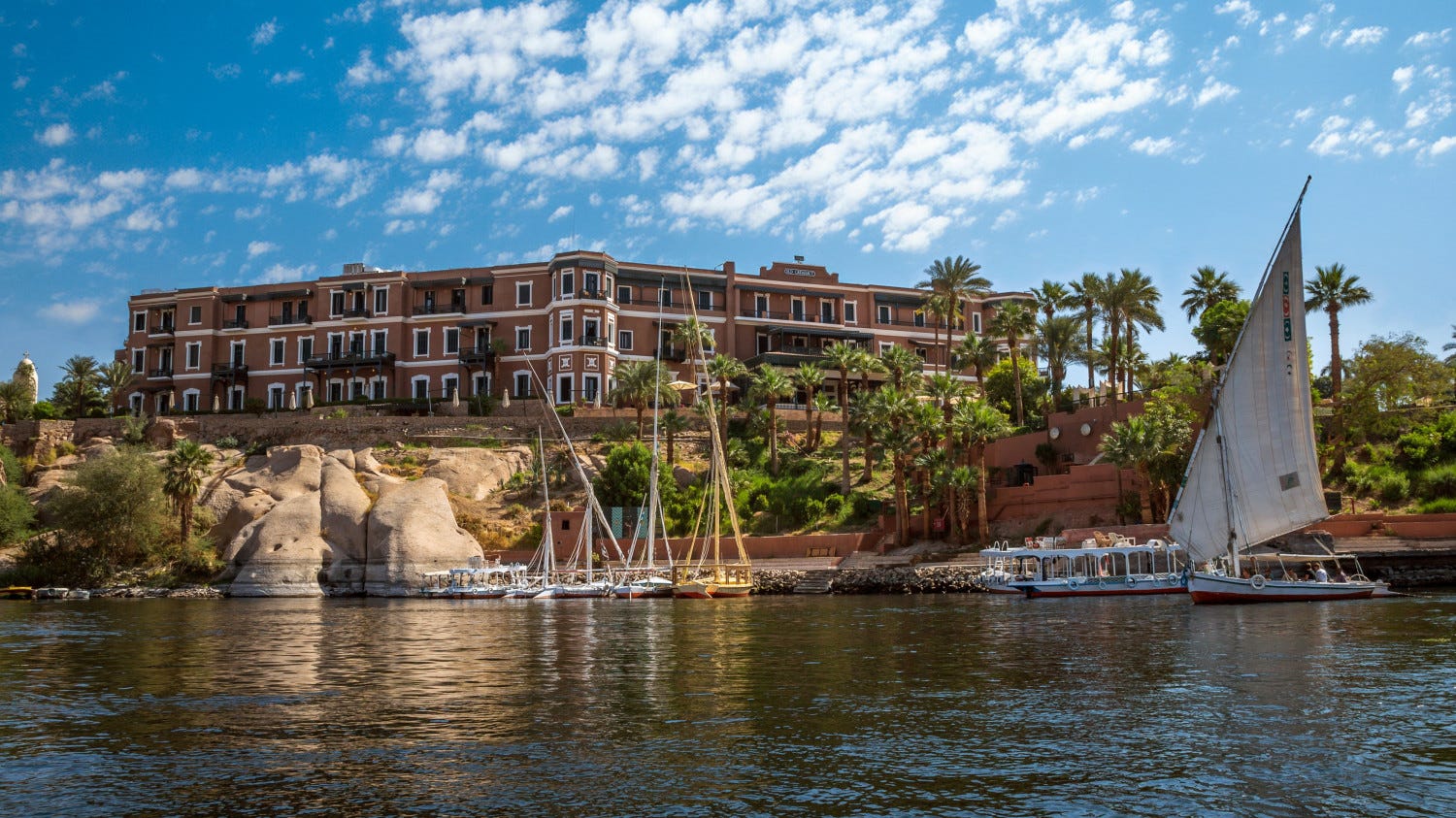
Case in point – two years ago, I sat on the patio of the Old Cataract Hotel in Aswan, watching the feluccas sail past at sunset, imagining Agatha Christie penning “Death on the Nile.” Previously a Sofitel, the Old Cataract commands prime real estate on the bank of the Nile and a famous history that rivals many of the Grande Dame properties in Europe.
Now, Mandarin Oriental will take over the Old Cataract as well as the Winter Palace in Luxor, planning significant renovations to both before they reopen in 2027 together with the debut of the brand’s first luxury river cruise between Cairo and Aswan.
Venice is the epicenter
Venice, where real estate is finite and demand is not, has become the center of this activity:
• Rosewood Hotel Bauer, the 1880 landmark situated between the Grand Canal and Piazza San Marco, is now in mid-renovation.
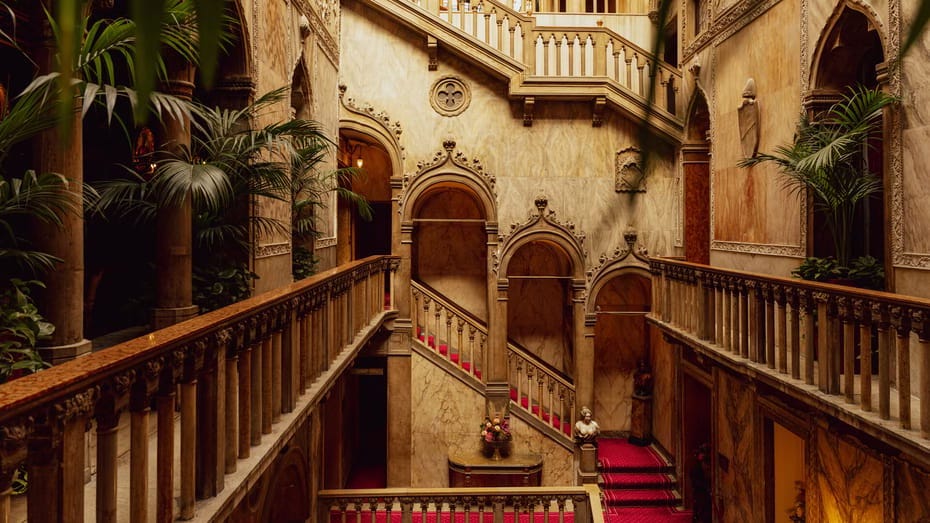
• Hotel Danieli is being reflagged as a Four Seasons. Designer Pierre-Yves Rochon is uniting its three historic palaces and restoring Gothic architectural details. The renovation carries a €30 million price tag, with 52 suites and 168 guest rooms. Reopening shortly (“mid-2026”).
• Orient Express Venezia opened in March inside the restored 15th-century Palazzo Donà Giovannelli in Cannaregio, with 47 rooms, suites, and residences, preserving original frescoes and high ceilings.
• Airelles Venezia opened on the island of Giudecca inside a former 16th-century school for young women and a 17th-century villa. Airelles also operates the only hotel inside the Palace of Versailles, so they know something about historic real estate.
Beyond Venice: the former U.S. Embassy in Mayfair is now The Chancery Rosewood. In Berlin, the 19th-century HQ of Dresdner Bank is being converted to a Four Seasons. A 15th-century Austrian castle on Lake Fuschl is now Rosewood Schloss Fuschl.


Why these assets, why now
As a hotel investor, I can confidently say that the economics of building a new luxury hotel from scratch have become almost untenable. Construction costs have skyrocketed with supply chain disruption. With the Iran war and the pandemic still causing ripple effects throughout travel, institutional investors hesitate to back new greenfield development in an industry so susceptible to disruption.
All-in development costs for luxury properties now routinely exceed $2 million per key, with high interest rates making financing even tougher.
With that kind of development cost, luxury hotels are chasing high ADRs (average daily rates), and one of the best ways to justify them is to offer a historic property. A palace comes with several hundred years of story in the walls. That story is the product – the difference between all-but-identical city Marriotts in San Francisco and Rome, and a place like Passalacqua on Lake Como, a palazzo that once belonged to counts and that hosted Churchill and (though not quite at the same time!) Bellini.
Historic hotels carry an ADR roughly 12% higher than comparably luxurious contemporary properties, with occupancy running about 8 percentage points above average.
Investors like me call this a moat. There is nothing comparable to staying in a 14th-century Venetian palace on the Grand Canal. A newly built five-star hotel nearby competes on amenities and price. The Danieli’s historic pedigree simply blows modern competition out of the (canal) water.
The Danieli in Venice
Who’s funding it
Ownership structures explain why properties that sat dormant or deteriorating for years are suddenly getting $30, $50, $100 million renovations. Sovereign wealth funds, primarily from the Middle East and Asia, have been targeting European gateway markets aggressively. In 2024, hard assets including real estate accounted for 61% of all publicly disclosed sovereign wealth fund direct investments, up from 40% the prior year.
Aman is a perfect illustration of what this capital is chasing.
In 2022, Saudi Arabia’s Public Investment Fund invested $900 million in Aman Group alongside Cain International, valuing the brand at $3 billion. The following year, Abu Dhabi’s Mubadala led a further $360 million round. That’s $1.26 billion in sovereign capital into a single ultra-luxury hotel brand in under 18 months. Aman now has properties under development at AlUla and Diriyah.
Egypt’s Garranah Group is backing the Luxor and Aswan Mandarin Oriental renovations and the river cruise, resulting in a luxury corridor linking Cairo, Luxor, and Aswan under the MO flag. Egypt gets world-class hospitality at its most iconic sites without bearing the full development risk, while Mandarin Oriental gets a flagship presence in one of the most famous destinations on earth.
Public Private Partnerships
Historic preservation in Europe adds another layer of complexity, which often requires both significant investment from an owner-operator, like a family office, or a company like LVMH (invested in Belmond), in partnership with the country or city where the development takes place.
Venice operates under one of the world’s tightest regulatory regimes – facades cannot be altered, architectural elements must be retained wherever possible, and permitting requires navigating multiple layers of local, regional, and national heritage authorities.
For most hotel developers, the combination of regulatory complexity and capital intensity is enough to steer clear of a project. In contrast, sovereign and institutional investors can hold an asset through a two- to three-year renovation and dark period without the financial pressure that kills most private real estate deals.
The Choice of Flag
The luxury brand brings a globally recognized flag, a distribution network, a loyalty program, and the operational expertise to run a property of this caliber.
The structure typically involves the investor owning the real estate while the brand manages under a long-term agreement. Mandarin Oriental’s Paris sale to Gruppo Statuto followed this model, with MO retaining a 50-year management agreement even after selling the asset.
The investor benefits from a world-class operator and premium brand attached to its irreplaceable asset. The brand gets a flagship property it could never afford to own outright, in a location with predictable traffic.
What it means for you
I rarely send clients to a new property in its first year, thanks to the heightened possibility of operational hiccups. But, if you can look past a missed turndown or slow breakfast service, the months right after a major historic property reopens tend to be the sweet spot. Opening-rate incentives are common before pricing stabilizes. Perhaps counterintuitively, neighboring properties often soften rates while a major competitor is off the market to entice travelers before the competition reopens.
When Rosewood Hotel Bauer (see above) comes fully online in Venice, expect the broader San Marco comp set to adjust upward.


🗝️ The Room Report - Personal reviews from my own travels
Passalacqua, Lake Como
In 2024 we stayed in a villa down the street from Passalacqua. When my son developed an ear infection on a weekend, I called their concierge to ask if they could recommend a local pediatrician. Not only did they find a doctor (who drove an hour to our villa on a Sunday), but the hotel also invited us up for a site visit, cocktails on the terrace, and a wine tasting. Now that is service.
Passalacqua offers 24 rooms on seven acres above Lake Como in a palazzo that once belonged to the Counts Lucini Passalacqua and that hosted Churchill and Bellini. “World’s 50 Best" named it the “Best Hotel in the World” in 2023.
It’s now owned by the De Santis family, who also own Grand Hotel Tremezzo farther down the lakeshore.
What sets Passalacqua apart from every other historic palazzo hotel in Italy is that it doesn’t feel like a museum. The De Santis family’s personal antiques are everywhere, plates on the wall that belonged to their grandparents, objects collected when the pace of travel was slower. You feel like a guest in someone’s home, rather than a customer in a hotel designed to look like someone’s home.
Chef Viviana Varese runs an open kitchen, meaning you can walk in and get something made to order whenever you want. We did a wine tasting in the private cellar and watched guests roll pasta with the kitchen team. The property spreads across the Palazzo, the Villa, and the Casa al Lago, a lakeside cottage with four rooms that’s perfect for families.
The calendar fills almost a year in advance, and they price accordingly.


🗝️ The Lobby Bar - Hospitality updates, promotions, and the occasional pun
• One&Only is coming to Courchevel. Kerzner International just announced One&Only Courchevel 1850, the brand’s first resort in the French Alps, opening in 2030 on the site of the historic Courcheneige Hotel, with ski-in/ski-out access to the Bellécôte slope. Also in the Courchevel pipeline: Raffles is opening its first-ever ski property there in 2028. Via HotelsMag
• Fouquet’s lands in Mykonos. Barrière just opened Fouquet’s Mykonos on Paraga Beach, the brand’s first Greece location, with 61 suites, three villas, an indoor pool (rare on the island), a Barbara Sturm spa, and a restaurant created with Roka. I’m there with clients this summer. First impressions to follow. Via HotelsMag
• World Cup hotel pricing update. If you’re planning to attend any matches this summer, the anticipated pricing hysteria in host cities has not materialized. 80% of hoteliers surveyed reported bookings are tracking below forecasts, with visa barriers and geopolitical concerns cited as the main factors. Rooms are available in Miami, LA, and New York at rates more reasonable than predictions suggested. Via HotelsMag
• The most stolen item from hotel rooms is… (hint – it’s not the shoehorn). Over 88% of hotel staff surveyed said towels are what’s most commonly filched, followed by bathrobes at 66% with hangers in third place. Hotel theft costs the industry roughly $100 million a year in the U.S. alone. The branded pens and mini soaps? Take ’em. That’s marketing. The Frette bath towels? Hotels are charging your card for those. Via AOL (is anyone else surprised that AOL still exists?)
🗝️ Anne Marie
alpenglowtravel.com | AnneMarie@alpenglowtravel.com
Really - stealing towels? I don't know if I've ever been impressed with a hotel towel ;) I love a good historic hotel - the stories become part of the soul :) Having worked at The Breakers - I've slowly been making my way through Americas historic hotels....
FAB explanation of the relevance of historic hotels. ‘Historic hotels carry an ADR roughly 12% higher than comparably luxurious contemporary properties, with occupancy running about 8 percentage points above average’—this part especially. I didn’t realise it was at 12%!