

🗝️ The Upgrade · Weekly by Anne Marie Brown
In The Upgrade this week:
· Pre-Departure – Why Is Everyone Going to Japan?
• The Room Report – Capella Kyoto (with guest writer Colin Nagy)
• The Lobby Bar – Japan’s tourist tax, Four Seasons Mykonos, Capella’s new president, Lake Como EDITION, Oetker’s first US property, Amanvari opening in Baja
Travelers,
If I get another request for cherry blossom season in Japan with a lead time of two months, I might expire prematurely. If you want to go in the spring, book a year in advance. If you want to go skiing this winter, start planning now.
This week, The Upgrade explores why it seems that everyone is going to Japan lately – where the luxury hotel market is headed, your guide to luxury ryokans, and a firsthand room report on one of the most exciting new openings of 2026, Capella Kyoto, from one of our industry’s tastemakers, Colin Nagy.
Buckle up, it’s a long one this week!
Happy travels! Anne Marie

🗝️ Pre-Departure — Hospitality Hot Takes
Why is Everyone Going to Japan? A Macro View By a Luxury Travel Agency Owner
In the past year, I’ve helped clients plan 12 trips to Japan, including:
Ski trips to Niseko to celebrate a 50th birthday
Retracing family roots in the countryside and exploring Japan through it’s artisans
A graduation trip to remember
A babymoon
30th birthday romantic ryokan escape
This has me wondering, where is our current obsession with Japan as a destination coming from?
The first time I traveled to Japan was in 2012. I was working at Exclusive Resorts and had been tasked with creating a luxury-level experience with unique access. At Virtuoso Travel Week, I found a relatively new DMC (destination management company), called Inside Japan. I reached out to hear their pitch, and we began building an incredible trip together.
I conducted that site visit with a colleague during a sticky August heatwave. To ensure our experience felt authentic, Tokyo gave us an earthquake on our first night. We watched our Peninsula Hotel room walls ripple gently, while everyone else acted as if nothing had happened. We spent the next week touring just about every luxury hotel product available, meeting with artisans for calligraphy and kimono dyeing, taking a taiko drumming lesson, and meeting a geisha in a members-only tea house.
Six years later, I returned to Japan with my husband while six months pregnant with our first child. For the doubters – yes, I ate all the sushi. In case you’re not aware of it, the birth rate in Japan has fallen precipitously. It’s now about only seven births per 1,000 people per year. So, if you know 100 people, maybe not even one of them might be pregnant. In this condition, therefore, I was treated like a Fabergé egg, escorted to elevators instead of being allowed to go up a flight of stairs, immediately given any seat.
We did the usual route – Tokyo (Aman), Hakone (Gora Kadan), Kyoto (Hyatt), but also some unusual things, such as driving super cars on the streets of Tokyo at night and visiting a temple outside of Kyoto that you have to apply to in advance (with a postcard!) to visit.


I fell in love with the country – the intentional, ubiquitous and distinctively Japanese hospitality; the art of noticing small things; the artisans; the exquisite kaiseki (elaborate multi-course) meals; the steaming onsen (hot spring bathing hotels). I have been a champion of tourism there since I first experienced their remarkable culture.
This brings us back to why Japan is only now becoming so incredibly popular with American luxury travelers.
Let’s Look at Some Numbers
A record 42.7 million foreigners visited Japan in 2025, a 15.8% increase over the previous record of 36.9 million in 2024, and the first time the total surpassed 40 million. [1]
That’s roughly 10 million more than the pre-pandemic 2019 total of 31.9 million. Visitor spending also hit a new record of ¥9.5 trillion in 2025. [1]
For Americans specifically: more than 2.7 million of us visited Japan in 2024, a 33% jump past 2023, and 58% above the 2019 pre-pandemic level. [2]
Why Is This Happening?
The Japanese tourism boom has largely been driven by four forces:
The weakening of the yen against the US dollar
The growing popularity of Japanese food in US fine dining
Anime, Pokemon, and pop culture attracting a Gen Z audience
The feeling of safety for international travelers
1. The Yen
My first trip to Japan generated the priciest expense report I’ve ever had to turn in. I’m pretty sure our karaoke evening was about $400, much to the surprise of both me and my boss at the time. (Sorry, Gina.)
While the exchange rate was around ¥110 to the US dollar in 2019, the yen weakened to between 140 and 160 throughout 2024. This made the news around the world, with Americans in particular being told that Japan was now on sale. [3]
2. The Omakase Expansion
If you have seen an omakase (chef-curated) restaurant opening every other week, you aren’t hallucinating. “Omakase everywhere” was one of the headline trends in the 2025 Hospitality Trends Report by AF&Co + Carbonate, describing these menus as “a sign of luxury and indulgence; a multi-course tasting menu journey with an element of surprise for the guest.” [4] Omakase-style dining has seen booking rates rise 22% annually, with seating typically limited to 8-12 seats per service. [5] High-end sushi restaurants like Masa in New York charge hundreds or even thousands of dollars per person, turning sushi into a luxury indulgence. [6]
3. Anime and Pop Culture
During the pandemic hiatus, we all became glued to Netflix. Interest in Japan’s culture grew among Gen Z consumers of Pokemon and reruns of Dragonball Z. A 2024 survey found that 42% of Gen Z watches anime every week, compared to just 25% who watch the NFL. Younger respondents reported that anime influences their style, identity, and friendships. [7]
4. Safety, Service, and Infrastructure
In the post-COVID world, we are a society that travels in spite of concerns about geopolitical disruption. Between new entry requirements (EES [the EU’s Entry/Exit System], I’m looking at you), wars (Iran, Israel, Ukraine), outbreaks (Ebola and hantavirus), and natural disasters, venturing abroad can feel intimidating to even the savviest travelers. As a first-world country with a largely homogeneous and peaceful population, great public transportation, and an influx of luxury hotels, Japan seems like a safe bet. Demand for high-end hotels and private tour packages has tripled. Accommodation now accounts for 33.6% of visitor spending, up from 29.4% in 2019. Japan’s luxury hotel market reached $7 billion in 2024 and is projected to reach $10 billion by 2033. [8]
Driven by high-net-worth individuals (HNWI) seeking unique cultural and historical experiences, Japan’s overall luxury travel market is projected to grow at 8.35% annually through 2033, reaching $91.7million. [9]
The Five Star Growth in Japan’s Hotel Scene
Aman Tokyo was the new kid on the block when we traveled there for our babymoon in 2016. It was the most I had ever spent on a hotel in my life, and I feel like my morning soaks in those giant black stone bathtubs, Japanese breakfast at hand, looking over the Tokyo skyline largely lived up to the hype. Now, major luxury brands are establishing new properties throughout the country, particularly in emerging resort destinations and cities beyond the Tokyo-Osaka-Kyoto corridor.

My favorite part of the Aman Tokyo was baths in this deep soaking tub looking over the skyline
Tokyo
• Bulgari Hotel Tokyo opened in April 2023, occupying floors 40-45 of a skyscraper in central Tokyo with 98 rooms and suites. Tokyo EDITION Ginza opened December 2023; Janu Tokyo (Aman Group’s second brand) opened in 2024; Fairmont Tokyo opened July 2025; JW Marriott Tokyo opened October 2025; and Park Hyatt Tokyo reopened after renovations in December 2025.
Osaka
• Four Seasons Hotel Osaka opened in summer 2024 and is already well-loved by my clients. The 221-key Patina Osaka opened in 2025 across from Osaka Castle, and the Waldorf Astoria Osaka opened in 2025 as part of the Grand Green Osaka development, with 252 rooms designed by André Fu Studio.
Okinawa/Regional
• Rosewood made its Japan debut in 2025 with Rosewood Miyakojima on Okinawa, a 55-villa resort overlooking Oura Bay.
This Year’s New (Luxury) Kids on the Block:
• Capella Kyoto opened March 23 in the Higashiyama District near Kiyomizudera and Gion. Designed by Kengo Kuma & Associates, it has 89 rooms and suites and is Capella’s first Japan property.
• Hoshino Resorts is opening KAI Kusatsu, a 94-key inn overlooking Mount Kusatsu-Shirane, and OMO7 Yokohama this year.
• Hoshinoya Nara Prison opens on June 25, converting the last of Japan’s Meiji-era “Five Great Prisons” into a 48-room luxury hotel with rooms fashioned from renovated solitary confinement cells. (No, they’re not limited to single occupancy!)
• 1 Hotel Tokyo, located in the upper floors of a Tokyo tower, is also opening this year.
WTF Is a Ryokan?
My parents liked to remind me that I was “Made in Japan” by placing gold stickers with that phrase on my bedroom door. (According to family lore, I was conceived in a ryokan in Niseko.) A ryokan is a traditional Japanese inn where guests sleep on tatami (woven mat) floors, relax in yukata robes, soak in natural hot spring baths (onsen), and are served multi-course kaiseki meals, all centered around Japan’s philosophy of inexhaustible hospitality.
Today, the ryokan market is expanding rapidly. It hit $2.2 billion in 2025 and is growing at 12% annually, driven largely by international demand. Six Senses and Dusit Thani have both opened ryokan-concept properties in Kyoto, Hyatt is launching an entirely new ryokan brand called Atona with its first locations opening in Hakone and beyond this year, and Marriott partnered with Ryokan Collection in 2024 to fold traditional inns into its portfolio.
Hoshino Resorts, the dominant domestic player, now operates 73 properties across Japan and keeps expanding its KAI onsen ryokan brand into regional destinations. Japanese tourism authorities found that 68% of prospective foreign visitors want to stay in a ryokan, but only 49% manage to do so, mostly because booking has historically been difficult and intimidating without the help of someone who knows the system.
My favorite ryokans are Gora Kadan and Gen.
Powder Chasers
If you know any serious skiers (in Colorado, I know many powder bros), they have probably waxed poetic about skiing in Japan. Even with the Rocky Mountains right in my backyard, I find myself talking with my husband about a spring break ski trip to Niseko with our powder hound kids. Apparently, in the face of skyrocketing Epic and Ikon Pass prices, the rest of the world has discovered that flying to Japan and staying for a week can actually be a better deal than skiing in Colorado, particularly after this year’s abysmal ski season.
Visitors to Japan’s slopes grew approximately 40% year-on-year during the peak season from November 2024 to February 2025, after already exceeding pre-pandemic levels in the 2023-24 season.[10] International arrivals surged nearly 50%, making up 80% of all skiers on the slopes, and accounted for around 90% of total spending during the 2024-25 winter season. [11]
The American booking pace is accelerating fast: as of mid-October 2024, Ski.com’s Japan sales for the 2024-25 season were pacing at nearly triple the previous year’s record total and had already more than doubled what they brought in for all of the 2023-24 season.
Takeaways
Japan rewards the clients who go in with a plan and a good advisor. The best ryokans in Hakone and Kyoto book out 6-9 months in advance, many require a Japanese-speaking intermediary to secure, and some of the most extraordinary experiences are unavailable to people trying to navigate the system alone.
For timing, late May through mid-June is the sweet spot: temples without tour groups, comfortable temperatures, and none of the Cherry Blossom pricing. September through mid-October is a close second. Avoid Golden Week (late April through early May), Obon (mid-August), and New Year’s week, all times when the whole country essentially takes a break and domestic travel surges.
🗝️ The Room Report - Personal Reviews

Capella Kyoto – With Guest Writer Colin Nagy
Colin Nagy is a global brand marketer in FAANG (Facebook, Apple, Amazon, Netflix, Google). In his alternate life he’s a writer covering travel, luxury, geopolitics, and culture. Colin has written the On Experience column in Skift for 10 years, with additional bylines in Monocle and the FT. He also co-edits the popular Substack Why Is This Interesting? He is also a luxury hotel aficionado, and one of the first people I know who has already visited the brand new Capella Kyoto.
When he messaged me to tell me that not only does he read The Upgrade, but he also had one of the best stays of his life at Capella Kyoto, I took advantage of my new connection to request a Room Report, hot off the press for one of the most exciting new luxury hotel openings this year.
Anne Marie: My UHNWI (Ultra High Net Worth Individual) clients typically gravitate toward the Aman circuit in Japan, with some Hakone onsens thrown in. Aman Kyoto is pretty epic, but it sounds like Capella Kyoto is going to give them a run for their money. How does their service style compare to what you’d find at an Aman or a Four Seasons?
Colin: I think Capella has reached a level of service consistency across the portfolio that is really top notch. I find it more personalized than Four Seasons in many respects, especially as that brand has scaled. It is warm, thoughtful, and precise. And if we add on top of this the Japanese hospitality, it was a win.
Anne Marie: I talk a lot about anticipatory service at ultra-luxury properties – did you experience any of this during your stay?
Colin: I stay with Capella frequently (Taipei, Bangkok, Sydney), so they were very thoughtful about understanding and recognizing preferences with my first stay at the Kyoto property. I’m trying to avoid booze and sugary welcome amenities, and they delivered nicely with fresh fruit. Dietaries were consistently checked in on with meals, but not in an annoying way: sometimes preferences change from stay to stay, but there was just enough care to let me know they were paying attention, yet flexible. Yoga mat in room, and just subtle, thoughtful turndown touches, generous acts in the room (beautiful amenities, good minibar), and I was recognized by name in most interactions.
Anne Marie: What room level did you book?
Colin: I was in a Premier Temple king looking out over the Kenninji Temple. Great amount of space, good seating area, and desk area/work station. Big key here is that the room was quiet and quite peaceful, and the views up into Gion past the temple were lovely. Great light.
Anne Marie: What’s the room product like? Any of my favorite hotel pet peeves from my article “what luxury hotels get wrong”?
Colin: They nicely threaded the needle between classic Japanese and contemporary. Sometimes traditional Japanese stays can feel a bit minimal and austere and I am pleased to report this room looked visually beautiful but also felt quite plush in the places that mattered (bed, seating, etc).
Anne Marie: How were storage space, light switches, pool chair access, check in speech?
Colin: Storage was great, and the highlight of the room was a simple console with analog switches that controlled everything. No stumbling through iPad menus or doing the late-night scavenger hunt to turn off the lights. This was exactly the room/electronics experience that I wanted. Simple, satisfying and intuitive.
Highlight for me was also the use of the private onsen room, which is a lovely, modern-feeling room with a bathroom, separate living space with couch and TV, shower area and an onsen hot spring. Really divine way to spend an hour.
Anne Marie: Is there a standout suite or room category worth the premium?
Colin: There are suites with private onsens, which for a special occasion could be quite a treat.
Anne Marie: Kyoto is one of the most competitive dining cities in the world. Does the hotel restaurant hold up, or do you leave the property for meals?
Colin: They have a collaboration with Singlethread in Sonoma, SoNoMa, which was meticulously done. Instead of competing in the hyper competitive kaiseki space in Kyoto, they are doing a blend of California and Japanese in a very elegant way. Also, for foodies, Singlethread carries a lot of weight and credibility and is an unexpected find in Japan. My dinner was impeccable, and there was a mango desert that I am still dreaming about. Service was just a wonderful mix of California five-star hospitality (some of the staff have come over to work) but also Japanese precision.
There is also a more casual restaurant, Lantern, where breakfast, lunch, and dinner are served, as well as a later-night bar and convivial dining area called Yoi. I loved the touch of the vintage lamps ported over from an old school, with beautiful photography throughout.
Anne Marie: What were the favorite things you ate and drank?
Colin: Tasting menu at Singlethread, without question. And they did a wonderful, very elevated oatmeal dish at breakfast that was dialed.
Anne Marie: Who is this hotel actually for? What made it stand out so much in your mind as one of the best experiences you’ve had?
Colin: People who want precision, dialed service, but also a more subdued environment. It is not hard to get to the tourist attractions and more vibrant areas, but this felt hushed and residential in the best way. Also, Capella still feels like an “if you know, you know” brand, which is different from the current vibe of Aman. Also, the guests seemed cool, interesting, and international. Not a bunch of rich people staring at TikTok.
Anne Marie: If you went back to Kyoto tomorrow, would you stay here again – and if not, where would you go instead?
Colin: Without question. One of my best stays in five years. I would recommend this to people who know their stuff and have seen the best.
Anne Marie: What’s the thing the hotel does better than anywhere else you’ve stayed?
Colin: They have only been open for over a month, but I felt that John Blanco and the hotel leadership had this place running like a Grand Seiko watch. No discernable mistakes or friction, and the entire Capella hospitality and service playbook was nicely installed.
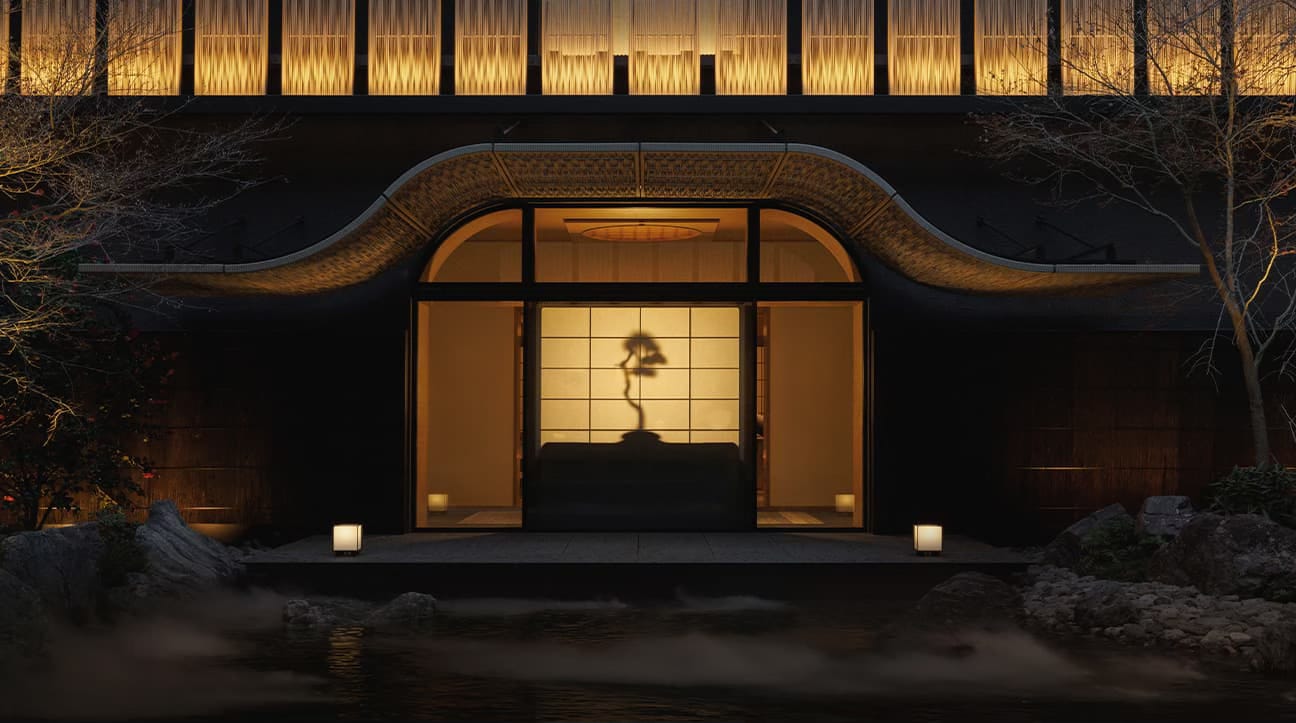
Capella Kyoto - image courtesy of the hotel
Additional Guest Take - by Viraj Bajoria
Viraj is a private equity consultant who’s spent time inside hospitality, including Marriott’s luxury growth team. Off the clock, he’s a relentless traveler chasing the world’s best hotels—Kasbah Tamadot and Capella Hanoi among the favorites. Earlier this year, he started putting pen to paper on Substack.
He Got Omotenashi’d
Viraj traveled this May with a group that had multiple dietary constraints. The kitchens simply knew and adjusted without making them feel like the difficult table. There’s a word for that, and it names the thing every first-timer feels but can’t quite place: omotenashi. The lazy translation is “hospitality.” The truer one is closer to wholehearted, anticipatory care offered with no expectation of return, the kind of thing a culture grows over four centuries rather than something a hotel switches on. Its roots run to the tea ceremony (chanoyu), where the host prepares details the guest will never consciously notice: the angle of a scroll, the flower cut that morning. The effort you don’t see is the entire point.
Two ideas sit underneath it, worth carrying with you:
Ichigo ichie (一期一会): “one time, one meeting.” The idea, also born in the tea room, that every encounter is unrepeatable and deserves your full presence. It’s why the service stays a step ahead of you: your one stay, on these exact days, will never come again, so it’s worth getting right.
Shokunin (職人): the craftsman’s spirit, the belief that mastering your work, however humble, is a matter of personal honor. It’s also the answer to the question every American quietly asks here: if no one tips, why is everyone so good? Because excellence in Japan was never for sale.
One morning at Patina Osaka, a director walked Viraj into the team’s daily meeting, where the department heads accounted for every small thing that had slipped the day before. Credit corporate for that part; it is a brand standard, the same ritual Patina runs everywhere it operates. What you won’t find in the manual is a director inviting a guest in to watch her team air their own failures without a flicker of defensiveness. The system is Patina’s, but the care is unique to Japan.
🗝️ The Lobby Bar
Hospitality updates, promotions, and the occasional pun
Japan’s Tourist Tax: You can’t talk about Japan without discussing the overtourism issue. Japan is now working on formal two-tier pricing at tourist sites, meaning foreign visitors will pay more than residents. The Tourism Agency is expected to publish guidelines by March 2027, with an expert panel currently gathering data from cities that have already tested the model.
Four Seasons Mykonos is now bookable. The Four Seasons Resort Mykonos opens on June 26 with 94 rooms, villas, and suites on Kalo Livadi Bay. It’s the first newly opened luxury property on the island from a major hotel group in quite some time. Book through us for upgrade priority and breakfast included.
Capella has a new president. Roland Fasel, who took over in April, is targeting Aman, Rosewood, and Belmond as his competitive set and told Skift he needs Capella in that top tier within a year. His strategy: scarcity, heritage property conversions, and highly personalized service over rapid expansion. Fasel ran operations at Aman for six years before moving to Maybourne, so he knows the category from the inside. Florence opens in 2027. Skift
The Lake Como EDITION is open. Marriott’s EDITION brand opened in a restored 19th-century palazzo in Cadenabbia in March, with 148 rooms and four dining concepts led by three-Michelin-starred chef Mauro Colagreco, his first restaurants in Italy. The signature dining experience is Cetino. There’s also a floating pool on the lake. FTN News Tao Hua Yuan
Oetker landed in the US. The Vineta Hotel reopened in Palm Beach on March 2 as Oetker Hotels’ first US property, restored to 41 rooms at 363 Cocoanut Row, a short walk from Worth Avenue. Oetker owns Hotel du Cap-Eden-Roc and The Lanesborough, among others. Rates from $1,900 per night. Hoodline AFAR
Amanvari about to open in Baja. Aman’s Mexico debut on Baja’s East Cape starts welcoming guests on August 1, with rates beginning around $4,500 per night and climbing past $7,000 in peak season. The 18-key property sits where desert meets sea, with a temazcal (ancient Mesoamerican sweat lodge), open-air yoga pavilion, and the privacy the brand is known for. It sits inside the Costa Palmas community alongside Four Seasons Los Cabos. Two Aman-adjacent brands, one address. Upgraded Points Asmallworld
Anne Marie
Sources
1. Nippon.com – Japan tourism records 2025 – https://www.nippon.com/en/japan-data/h02673/
2. Japan Travel – USA-Japan tourism 2024 breaks all-time record – https://www.japan.travel/en/us/press-release/usa-japan-tourism-in-2024-breaks-all-time-record/
3. Nippon.com – Yen exchange rate data – https://www.nippon.com/en/japan-data/h02262/
4. Restaurant Business Online – Omakase menus go beyond their Japanese roots – https://www.restaurantbusinessonline.com/food/omakase-menus-go-beyond-their-japanese-roots-new-culinary-territory
5. Market Reports World – Sushi restaurants market – https://www.marketreportsworld.com/market-reports/sushi-restaurants-market-14722218
6. Toast POS – Sushi trends – https://pos.toasttab.com/blog/on-the-line/sushi-trends
7. Asia Times – Why everyone loves Japan – https://asiatimes.com/2025/12/why-everyone-loves-japan/
8. IMARC Group – Japan luxury hotel market – https://www.imarcgroup.com/japan-luxury-hotel-market
9. IMARC Group – Japan luxury travel market – https://www.imarcgroup.com/japan-luxury-travel-market
10. Visa – Skis up: enduring appeal of Japan’s snowy slopes – https://www.visa.com.sg/about-visa/stories/2025/skis-up-enduring-appeal-of-japans-snowy-slopes-deliver-a-tourism-boost-in-the-ski-season.html
11. Travel Weekly Asia – Japan’s ski tourism hits new heights – https://www.travelweekly-asia.com/Destination-Travel/Japan-s-ski-tourism-hits-new-heights
Thanks for writing such a good piece on Japan. I also think there is a renewed interest in design (whether driven by actual interest or social media tbd) and Japan has an amazing design culture and ethos that is not easily repeatable. I will also say, though it’s a very popular tourist destination, it didn’t feel given over to tourists in the way other places that rely heavily on tourism can. I guess we shall see if that holds.
need to get to japan asap!