

🗝️ The Upgrade | Weekly by Anne Marie Brown. Issue 9 · Branded Residences
In The Upgrade this week:
Pre-Departure – Branded Hotel Residences, Financing or Folly? With an interview with Emma Näpänkangas
The Room Report – Maslina Hvar, Croatia
The Lobby Bar – Ritz Carlton Yacht is losing money, ResortPass signs a big deal, Expedia is moving ad budget to creators, and free water at a hotel restaurant is apparently not a right
Travelers,
It’s Euro Summer for our family, and we are about to embark on an epic month-long jaunt around England, the Dolomites, and the South of France. 5 hotels and 1 villa, three countries, 6 cities. Two kids ages 5 and 7. Wish me luck.
Check out my packing lists if you want to see what I’m aiming to fit in my suitcase. Euro Summer Packing List, French Riviera Packing List
This week, The Upgrade explores branded hotel residences. I’m talking about the Aman, Montage, and One & Only villas that are privately owned and attached to these luxury hotels. We see pitches from hotels looking for LP investors (Limited Partners), and one of the most frequent inclusions in these pitches as of late is the concept of a branded residence model to finance construction. With prices north of $10M, I began to wonder, who on earth is buying these? Why? While the model may make financial sense to developers, it’s often fraught with inherent tensions that the GM has to sort out, unless it’s designed thoughtfully.
Happy travels! Anne Marie

Yours truly on a speedboat in Hvar with one of my Bougie Bunnies, Jack
🗝️ Pre-Departure — Hospitality Hot Takes
Branded Residences — Why Luxury Hotels are Betting on Villas
I’ve worked for two of the largest luxury destination clubs, Exclusive Resorts and Inspirato. The pitch at both these companies was the certainty of a hotel experience with the privacy and space of a villa. The hotel industry is now finally catching up to that tempting offer with an explosion of branded hotel residences.
Conduct a site inspection at just about any luxury resort in Mexico today and you’ll hear about their residence product. Families are traveling as multigenerational groups more than ever, particularly my client base, and they want space for the grandparents, nanny, and maybe another family. However, owning a resort residence (i.e., second-home ownership with a more alluring label) comes with maintenance and upkeep. Branded residences aim to straddle this yawning gap.
Branded residences, the private homes sold alongside luxury hotels under the hotel’s flag, have been one of the fastest-growing segments in hospitality for decades. In their current form, they date to The Four Seasons Boston in 1985 and have now become central to how luxury hotels are built in the face of rising construction costs, high land prices, and inflation.
The sector has grown 180% over the last decade. There are now over 700 branded residences globally, with supply expected to double by 2030.[1] Savills forecasts that 60 new brands will enter the space over the next five years.[2]Marriott alone has 142 residences with 138 more in the pipeline. And hospitality outsiders Ferrari, Bentley, Fendi, Armani, and Bulgari have all entered the fray as well.
Why Developers Love This Model
As I noted in The Upgrade a few weeks ago about historic renovation projects, building a luxury hotel is a terrible standalone investment. New construction costs upwards of $2 million per key today. So, what’s a development group to do? They can’t all head down to the bank in a trenchcoat hiding cash to bid on a hotel like my grandfather used to do.
Enter: Residential sales. Developers often sell units before construction is complete, with deposits of up to 70% of the purchase price before handover. In essence, residence buyers are the ones financing the hotel.
Marriott’s chief development officer for North American luxury brands said at the 2026 Americas Lodging Investment Summit: Half of Marriott’s new luxury hotel signings now include a residential component because “luxury hotels are hard to build ... residential allows for higher returns.”[3]
Here’s how the financing for branded residences works:
Hotel brands typically operate under a management agreement and collect fees of 2-3% of property value and rental income, without owning the asset directly. The developer takes the risk. The brand takes the fees and gets the marketing halo.
Additionally, branded residences command a significant premium. The average markup over comparable unbranded properties across the global market is around 33%, rising to 47% in some emerging markets and exceeding 90% in parts of Dubai.[4]
The developer owns the building, not the brand. There is a licensing agreement in place, and that license can expire or be terminated. Management agreements with hotel brands typically run around 30 years. Buyers who purchased under a specific brand may find their property rebranded if the contract is not renewed.
The inherent tensions branded residences create: Four Seasons Hualalai
The downside of branded hotel residences appears in the tensions they create between the two classes they serve, residence owners and hotel guests. Often, the property GM is left to manage demand for the same resources (restaurant reservations, spa access, pool chairs) between the two groups.
The clearest case study of what happens when the interests of residence owners and hotel management diverge is a lesson from Four Seasons Hualalai on Hawaii’s Kona coast. In 2015, roughly 75 homeowners filed suit after fees charged to their guests skyrocketed following a management restructuring that placed Four Seasons in charge of both the hotel and the broader resort community. During peak weeks, the “unaccompanied guest” fee rose to $250 per day per adult.[5][6]
The plaintiffs argued this created a direct conflict of interest: the same company now managed both the hotel and the residential community with a financial incentive to push private renters toward the hotel instead. The resort responded that the fees were permitted under existing agreements. A hotel guest present at the time described what he called an “apartheid experience,” referring to the visible friction between how residents and paying hotel guests were treated. That is an extreme characterization, but the underlying dynamic is not unique to Hualalai.
How much do they cost?
Aman Beverly Hills starts at $20M with an average of $7,000/sq ft (a Southern California record), and the first tower is already 60% under contract. The developer explicitly states that “today’s ultra-high-net-worth buyers seek certainty, homes that are resilient, private, and secure.”
At Aman New York, one unit sold for $64M (up from the $51M the previous owner paid), another recently traded at close to $30M asking, and a Thailand-based investor purchased a unit for $20.7M.
Four Seasons ranges from roughly $1M in secondary markets to over $30M for oceanfront and ultra-prime urban residences, which explains why the averages look depressed when you combine them all.
Who is buying?
These sales are almost always structured through LLCs, family trusts, BVI (British Virgin Islands) companies, and Cayman entities precisely to obscure buyer identity.
Past data for sales of the residences north of $20M include American tech and finance wealth, Middle Eastern family offices (Saudi and UAE specifically), and Southeast Asian buyers (Singapore-based, often ethnic Chinese with Singaporean or Hong Kong residency). Russian buyers dropped off sharply following sanctions imposed after Putin’s full-scale invasion of Ukraine in 2022. Mainland Chinese buyers for US property have also pulled back due to capital controls.
The Aman New York resale market in late 2025 included a Thailand-based investor who bought for $20.7M and flipped it six months later, and an anonymous buyer who paid $35M in 2022 and recently listed at close to $30M.
The Offshore Money Issue
Branded residences sit at the intersection of two things that have historically attracted foreign capital seeking discretion: a globally recognized brand and high-value real estate in prime locations. Like a lot of high-value real estate in cities like New York and Vancouver, these properties attract foreign money thanks to their ownership opacity.
Brookings researchers studying ownership in New York, Miami, and Boston found that the probability of corporate ownership of a residential property exceeds 50% once it is valued at $10M, and exceeds 80% at $100M.[7]
Shell companies are about twice as likely to be listed as owners of high-value properties. When researchers attempted to measure offshore ownership using only public data, it appeared to be nearly zero, attributing less than 0.3% of NYC real estate value to foreign jurisdictions. That near-zero figure is itself evidence of how effectively opacity works: shell companies registered domestically hide the true owners.[7]
The 2022 DOJ seizure of Viktor Vekselberg’s properties is a good example. The official register listed only a Panamanian shell company with a mailing address at Madison Square Garden. Vekselberg, subject to US sanctions for years, had held a $70M US property portfolio without detection until investigators pieced together the ownership chain.
A unit purchased through an LLC and placed in the hotel’s rental program can generate income, appreciate in value, and remain legally opaque about its actual owner. Meanwhile, the brand provides legitimacy, and the LLC ownership structure provides cover.
While most buyers are wealthy people who love a hotel and want a turnkey second home without the headache of managing one, the structural features that make these properties appealing to legitimate buyers also make them attractive to those for whom enjoying the spa is a secondary (if that) consideration.
🗝️Q&A: Emma Näpänkangas on Branded Residences
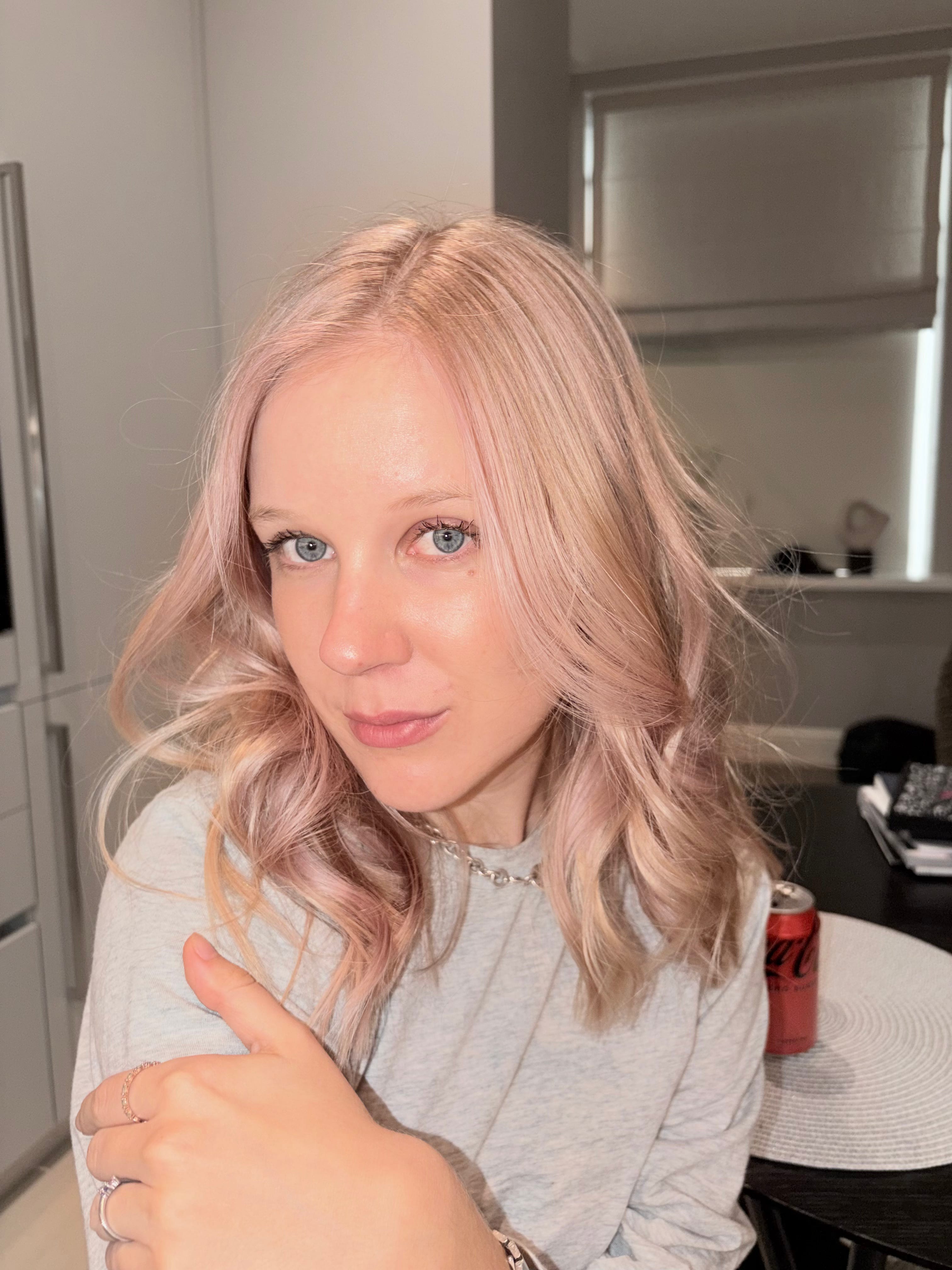
Emma Näpänkangas is a Finnish hospitality strategist and writer with degrees in philosophy and hospitality. She runs The Philosophy of Hospitality on Substack, consults on strategy and storytelling for brands in luxury, hospitality, finance, and healthcare, and contributes to EHL Insights. She is a reader of The Upgrade | Weekly and agreed to answer some of my questions about the trend:
Anne Marie: Where do you think all the money to buy these residences is coming from? Some of these Aman and Montage properties are upwards of $20M.
Emma: There’s definitely an emotional driver when it comes to branded residences, both from the homeowner and investor side. People who buy, say, an Aman residence for $20M are essentially making an identity purchase and opt in on the brand’s philosophy in a more permanent way.
From the investor side, on the other hand, there is most definitely some FOMO (fear of missing out) and scrambling because the premiums on branded residences are simply so high that everyone and their mom simply wants in on the fun. For a development perspective, I recently spoke to Christopher Norton (CEO of Equinox hotels), and he said branded residences are now just a standard part of hotel developments since they are what make the hotel profitable at the end of the day.
Anne Marie: Do you have any branded hotel residence projects that you think have been executed better than others? What makes for a successful integration of residents and hotel guests?
Emma: I’m actually quite wary of naming a winner because I haven’t experienced one as a resident myself, and I think branded residences have enough hype for them from the outside.
What I can speak on, however, is what doesn’t work, and here I think the biggest risk is brand dilution. A branded residence does not need to have the actual brand behind it to carry the name, because a developer can just license it and slap it on the building, and then the brand has nothing to do with a person’s actual experience.
I think this is an extremely risky business for hospitality brands that pride themselves on a certain level of service and brand promise. To give you an example, there is a Nobu residence in Toronto, Canada, which is one of these licensed deals, and the feedback from residents on the quality of the building has been subpar.
Anne Marie: What do you think of the potential for money laundering in these projects?
Emma: The tea surrounding this is so piping hot it’s hilarious. But anyway, I’m a hospitality girl and not a financial crime expert. HOWEVER, I will say this: I think the brand premium that makes branded residences super attractive commercially is entirely dependent on trust, meaning that if branded residences become associated with sketchy/opaque money, those double digit premiums will disappear. Transparency is key.
Anne Marie: Is there anything you think the readers of The Upgrade | Weekly should know about branded residences that I haven’t covered?
Emma: A house of cards I have my eyes on is non-hospitality brands that are entering the space – your car brands (Porsche, Bentley) and fashion houses (Fendi, Armani, Missoni), et cetera (the crystal house Baccarat). Everyone wants to be in hospitality now, but I’m personally dubious about how brands that do not have hospitality savoir-faire built into them can pull it off in the long term.
🗝️ Room Report — Maslina, Hvar, Croatia


Matt and I traveled to Croatia and stayed at Maslina Resort (just off Split on the Dalmatian Coast) in the summer of 2023 with his parents, our kids, and our nanny in tow, which meant we needed the four-bedroom villa. Sitting on the patio at that villa, with the wind rustling the pines, watching the sun set over the Adriatic was a Zen moment I focus on when I try (generally without success) to meditate.
The resort sits on the shore of Maslinica Bay on the island of Hvar, and from the water it’s nearly invisible, the buildings covered in bamboo panels that blend entirely into the pine forest behind them. Maslina means “olive,” and every pre-existing olive tree on the property has been preserved. The whole place operates on a “mindful luxury” philosophy – it’s definitely a wellness-oriented property. There were some Butterfield & Robinson and Backroads groups there during our stay, which usually means a solid hotel with a strong concierge and reservations team.
The villa was spectacular. The décor is modern with tons of light wood and floor-to-ceiling windows that look out over the sea. The stairs are a bit challenging for small kids; ours managed to avoid falls.
Each bedroom has king beds, a full living room, and outdoor space that made it feel like a beautiful home that happens to offer resort services. The pool wasn’t heated, which in high summer sounds fine in theory, but my kids and I are wusses and barely dipped our toes in before we chickened out.
The two main resort pools are heated saltwater, one an infinity pool with sea views and the other a larger family pool with a shallow entry platform, so we spent most of our pool time there rather than at the villa. The outdoor terraces and the grounds themselves were where I fell in love with the property. Everything is stone, wood, and sea views.
The kids’ club has a dedicated space with water elements, a climbing wall, and a full range of activities. It’s gorgeous – like the Montessori playhouse I dreamed I’d have instead of the destruction zone that is my basement filled with plastic noise-making dinosaurs and Barbie gear.
The spa, called Pharomatiq, takes its name from “Pharos” (Greek for lighthouse or beacon), the ancient name for Stari Grad (Croatian for Old City), and “aromatic,” a nod to Hvar’s long history with healing plants and herbs. It runs 600 square meters and includes a gym with sea views, steam rooms, saunas, and a cold plunge, and every stay begins with a health consultation where you choose an intent for your time there. I didn’t get nearly enough time in it.
Stari Grad, one of the oldest towns in the Eastern Adriatic, is a short walk away, and Duboković, the local winery, produces bottles shipped across Europe, with small group tastings available on request. Hvar town is a transfer away from Stari Grad if you want the nightlife and the scene, but Maslina sits on the northern, quieter, end of the island, and that’s the point.
Who would love Maslina? Multigenerational families who want a home base that works for everyone. Grandparents who want a spa and good food, kids who need to be entertained, parents who want more space than a hotel room for their families. Budget at least four nights.
🗝️ The Lobby Bar — Hospitality updates, promotions, and the occasional pun
The Ritz-Carlton Yacht Collection is losing a lot of money.
The company is running at roughly 50% occupancy, well below its target of 85-90%, and has pushed that goal back to 2029. Marketing spend topped $104M in 2025 alone, and accumulated losses since 2017 now sit at nearly $700M. Its largest creditor agreed to defer $171M in repayments while the controlling shareholders injected another $275M in equity, taking total capital past the $1 billion mark. The rates are excellent ($1,900 per guest per day), but filling three yachts is not like filling one. Four Seasons Yacht I, Aman at Sea, and Orient Express are all coming. Read more.
Hilton just launched its 28th brand.
Undergraduate by Hilton is designed for smaller college towns that its Graduate chain doesn’t reach, with a lower development cost and simpler operating model. Hilton acquired Graduate in 2024 for $210 million and is now building the tier beneath it, with long-term potential for 400-500 hotels. First property expected in 2027. The name is either clever or a little too on the nose, depending on your sense of humor.
Expedia is moving ad budget to creators.
Expedia partnered with YouTube streamer iShowSpeed for a live-streamed trip that reached over 400 million people. Their SVP of brand marketing called him a “Gen Z Anthony Bourdain.” The underlying data: a Skift Research study found that 57% of travelers are comfortable booking high-priced activities directly through social media, with younger travelers leading that shift. Booking and Virgin Voyages are following the same playbook. The longer-term questions are whether TikTok and YouTube can build booking layers on top of their discovery platforms, the way Google built on search, and whether OTAs (online travel agencies) end up being cut out.
Marriott signed a global deal with ResortPass.
The partnership expands the number of Marriott properties offering day access to pools, spas, and fitness centers without an overnight stay. Marriott already had over 500 properties on ResortPass before this agreement, so this formalizes and accelerates what was already happening. The question worth watching: does selling pool chairs and spa access to day visitors improve revenue, or does it crowd out paying guests at peak hours? Worth keeping an eye on at properties where you have clients booked. Full story at Skift.
Tap water.
Italy’s Supreme Court ruled that hotels are not legally required to serve tap water. The case started at the five-star Hotel Sassongher in the Dolomites, where a guest staying over New Year’s 2020 was told only bottled mineral water was available at dinner, at €7 a bottle. She sued on the grounds that water is a universal human right and lost at every level, including Italy’s Court of Cassation. France requires a carafe of water with every meal. Spain has required free drinking water at bars and restaurants since 2022. Italy has no such requirement. File under “things to know before you go.”
Hyatt CEO Mark Hoplamazian gave an interview to the WSJ worth reading.
He covered the World Cup’s impact on hotel demand in host cities, the challenge of paying housekeepers wages that reflect what the job actually costs now (the article refers to salaries soon reaching $100,000+ in some markets), and his view of the “K-shaped economy” — the widening split between travelers spending more than ever on luxury and everyone else. His framing of Hyatt’s positioning tracks with what we’re seeing on the booking side. Read it here.
Capella Hotels has a new president with a one-year deadline.
Roland Fasel, who took over in April, is openly targeting a position alongside Aman, Rosewood, Six Senses, and Belmond as Capella’s competitive set. His stated goal: get there within a year. He spent six years as COO at Aman and most recently ran operations at Maybourne (Claridge’s, The Connaught, The Berkeley), so he’s not bluffing about knowing how those brands operate. The growth play goes through Capella’s sister brand Patina. Full story at Skift.
A note on the Colosseum for anyone with Italy on the summer itinerary.
All tickets are now issued in the holder’s name and require matching ID at entry, enforced strictly since May. Tourists who show up with tickets purchased through resellers that weren’t properly name-matched or weren’t issued through licensed operators are now getting turned away at the gate. Book through the official site at ticketing.colosseo.it or a vetted operator. It’s no fun to stand outside the Colosseum on a 95-degree July day explaining your receipt.
🗝️ Anne Marie
Sources
[2] EHL Hospitality Insights, “Branded Residences”
[3] CoStar, “Luxury Hotel Development Increasingly Dependent on Branded Residential,” February 2026
[4] Elite Traveler, “Hotel Chains and Branded Residences”
[5] Zyda v. Four Seasons Hotels and Resorts / Hualalai Investors LLC, filed 2015.
[6] Coverage of Hualalai lawsuit, various press reports, 2015-2016.
Super interested in following this yacht trend. Perhaps it's not 'enough' to just be a luxury yacht with a brand name.
The tea on the yacht business…. Omg